
Quick Answer
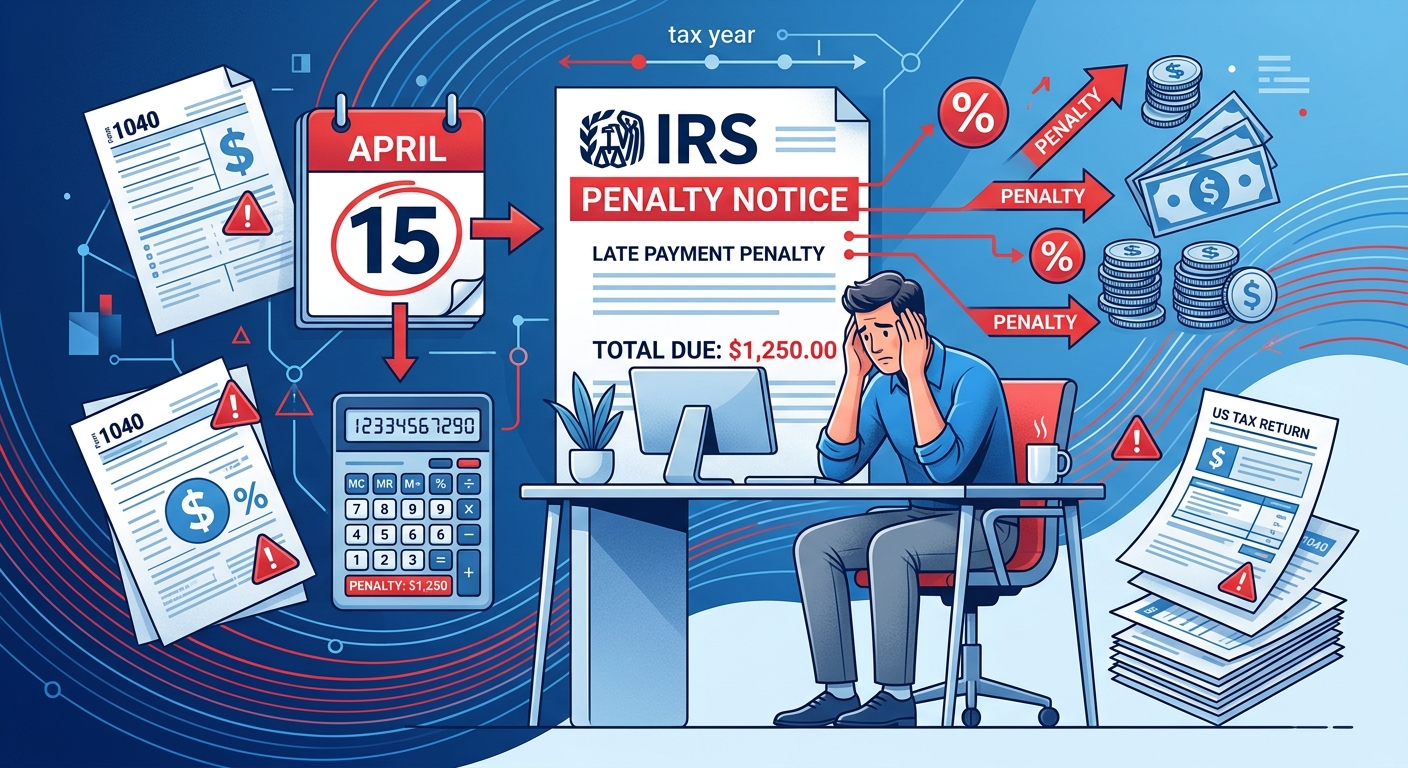
What’s the fine for not filing taxes? The IRS charges a failure-to-file penalty of 5% of your unpaid taxes for each month your return is late, up to a maximum of 25% of the balance. If you file more than 60 days late, you face a minimum penalty of $525 or 100% of your unpaid taxes, whichever is smaller. On top of that, you’ll owe interest on the outstanding balance and could face criminal prosecution in severe cases.
Understanding the Real Cost of Missing the Filing Deadline
Most taxpayers understand they need to file by April 15, but what many don’t realize is just how quickly penalties compound when you miss that deadline. The IRS doesn’t send a friendly reminder and move on. They calculate penalties by the month, stack interest on top, and in extreme cases, pursue criminal charges that can land you in federal prison.
The failure-to-file penalty is separate from the failure-to-pay penalty, and if you trigger both simultaneously, you’re looking at a financial nightmare that grows exponentially the longer you wait. Whether you’re a W-2 employee who forgot to file, a 1099 contractor juggling multiple income streams, or a small business owner buried in paperwork, understanding these penalties can save you thousands of dollars and significant legal trouble.
Breaking Down the IRS Failure-to-File Penalty
The core penalty structure is straightforward but punishing. For every month or partial month your tax return is late, the IRS charges 5% of the unpaid tax amount. This continues monthly until you hit the 25% maximum penalty cap. If you owe $10,000 in taxes and file five months late, you’re looking at a $2,500 penalty on top of your original tax bill.
The 60-Day Minimum Penalty Trap
Here’s where it gets worse. If you file more than 60 days past the original due date or your extended due date, the IRS imposes a minimum penalty of $525 or 100% of your unpaid taxes, whichever is smaller. This means even if you only owed $300 in taxes, filing 61 days late automatically triggers a $300 penalty, effectively doubling what you owe.
For taxpayers who owe less than $525, this minimum penalty rule can be devastating. A freelance graphic designer who owes $400 in taxes but misses the deadline by three months will pay $400 in penalties, bringing their total bill to $800. That’s a 100% markup for a paperwork delay.
How the Monthly Calculation Actually Works
The IRS counts partial months as full months. If your return is due April 15 and you file on May 2, that counts as one full month late, triggering the 5% penalty. File on June 3, and you’ve now accrued two months of penalties at 10% of your unpaid balance.
Let’s walk through a real scenario. Sarah, a 1099 marketing consultant, owed $8,000 in federal taxes for 2025. She got overwhelmed with client work and didn’t file until August 20, 2026. That’s four full months late. Her failure-to-file penalty alone is $1,600 (20% of $8,000). Add in failure-to-pay penalties and interest, and she’s looking at close to $2,000 in additional costs just for missing the deadline.
Failure-to-Pay Penalties Stack On Top
Many taxpayers confuse failure to file with failure to pay, but these are two separate penalties that often occur together. The failure-to-pay penalty is 0.5% of your unpaid taxes for each month or part of a month the tax remains unpaid, up to a maximum of 25%.
When both penalties apply in the same month, the IRS caps the combined penalty at 5% per month. However, after you file your return (even if it’s late), the failure-to-file penalty stops, but the failure-to-pay penalty continues at 0.5% per month until you pay in full or hit the 25% cap.
Interest Compounds the Pain
On top of penalties, the IRS charges interest on your unpaid tax balance. As of 2026, the interest rate for individuals is 7% annually, compounded daily. This interest applies to both your unpaid taxes and any unpaid penalties. The clock starts ticking the day after the April 15 deadline and doesn’t stop until you pay every dollar you owe.
If you owe $15,000 and take six months to pay, you’re looking at approximately $525 in interest alone, assuming the 7% annual rate holds steady. That’s in addition to any late-filing or late-payment penalties you’ve already triggered.
State Penalties Can Double Your Trouble
Federal penalties are only half the story. If you live in California, the Franchise Tax Board (FTB) imposes its own set of penalties that run parallel to IRS charges. California’s failure-to-file penalty is 5% of the unpaid tax for each month or part of a month your return is late, up to a maximum of 25%, just like the IRS.
California-Specific Considerations
California doesn’t mess around with non-filers. The FTB has aggressive collection powers, including the ability to garnish wages, levy bank accounts, and file liens against your property. If you owe both federal and California taxes and fail to file, you’re essentially doubling your penalty exposure.
A small business owner in Los Angeles who owes $12,000 to the IRS and $8,000 to California and files four months late will pay $2,400 in federal penalties and $1,600 in state penalties. That’s $4,000 in avoidable penalties for missing one deadline.
California also imposes a minimum tax on LLCs and corporations regardless of income. If you fail to file your LLC return, you’ll owe the $800 annual franchise tax plus penalties and interest. Even if your LLC had zero income, the penalty clock still runs.
Criminal Consequences Are Real
While most non-filers face civil penalties, the IRS can and does pursue criminal charges in cases involving willful failure to file or tax evasion. Under federal law, failure to file a return can result in up to one year in prison for each year you didn’t file. If the IRS determines you filed a fraudulent return or engaged in tax evasion, you could face up to five years in prison.
Criminal prosecution is reserved for egregious cases, typically involving high-dollar amounts, multiple years of non-filing, or evidence of intentional fraud. However, the IRS has stepped up enforcement efforts in 2026, and prosecutors are more willing to pursue criminal charges than they were a decade ago.
What Triggers IRS Criminal Investigation
The IRS Criminal Investigation division looks for patterns of willful non-compliance. Red flags include multiple years of unfiled returns, substantial income with no tax payments, operating businesses under the table, hiding income in offshore accounts, and ignoring multiple IRS notices.
A real estate investor who flips properties, generates $200,000 in annual income, and fails to file returns for three consecutive years is playing with fire. The IRS will eventually catch up through third-party information reporting, and when they do, criminal prosecution becomes a real possibility.
KDA Case Study: Small Business Owner
Michael runs a small e-commerce business selling outdoor gear. In 2024, he got behind on his bookkeeping and missed the 2025 filing deadline. By the time he contacted KDA in September 2026, he owed $18,000 in federal taxes and had accrued $3,600 in failure-to-file penalties plus $900 in failure-to-pay penalties. Interest had added another $630 to his bill.
KDA immediately filed his delinquent return and negotiated an installment agreement with the IRS, stopping the penalty clock. We also identified $4,200 in missed deductions from his home office and business equipment purchases that reduced his actual tax liability to $13,800. After applying penalty abatement based on reasonable cause, we got his failure-to-file penalty reduced by 60%, saving him $2,160. His total savings came to $6,360, and he paid KDA $2,500 for representation and tax preparation. That’s a 2.5x first-year return, and he avoided further penalties and potential criminal investigation.
Ready to see how we can help you? Explore more success stories on our case studies page to discover proven strategies that have saved our clients thousands in taxes.
How to Minimize Penalties If You’ve Already Missed the Deadline
If you’ve missed the April 15 deadline, every day counts. The sooner you file and pay, the less you’ll owe in penalties and interest. Even if you can’t pay the full amount, filing your return immediately stops the failure-to-file penalty, which is ten times more expensive than the failure-to-pay penalty.
File Immediately, Even If You Can’t Pay
The single most important action you can take is to file your return as soon as possible, even if you don’t have the money to pay your tax bill. This stops the 5% monthly failure-to-file penalty and limits you to the much smaller 0.5% monthly failure-to-pay penalty.
If you owe $20,000 and you’re three months late, filing immediately saves you $3,000 in additional failure-to-file penalties over the next year. You’ll still owe failure-to-pay penalties and interest, but those are far less punishing than the compounding 5% monthly hit.
Request Penalty Abatement for Reasonable Cause
The IRS can waive penalties if you can demonstrate reasonable cause for your failure to file. Acceptable reasons include serious illness, death in the family, natural disasters, destruction of records, or reliance on incorrect advice from a tax professional.
To request penalty abatement, you’ll need to write a letter to the IRS explaining the circumstances that prevented you from filing on time and providing supporting documentation. Medical records, death certificates, insurance claims, and sworn statements can all support your case.
First-time penalty abatement is also available if you have a clean compliance history for the past three years. If you’ve filed and paid on time for 2022, 2023, and 2024, the IRS will often waive penalties for your 2025 tax year as a one-time courtesy. This can save you thousands of dollars with a simple written request. Consider our audit representation services if you need expert help navigating penalty abatement or IRS negotiations.
Set Up a Payment Plan to Stop Collection Activity
If you can’t pay your full tax bill immediately, the IRS offers several payment plan options. A short-term payment plan gives you up to 180 days to pay in full with no setup fee. An installment agreement allows you to pay over time, typically up to 72 months for balances under $50,000.
While payment plans don’t eliminate penalties and interest, they prevent the IRS from escalating to aggressive collection actions like wage garnishment and bank levies. The failure-to-pay penalty is also reduced from 0.5% to 0.25% per month while you’re in an active installment agreement.
Special Situations and Edge Cases
Not every non-filing scenario is straightforward. Certain taxpayer situations create unique penalty exposure and require specialized strategies to minimize damage.
Multiple Years of Unfiled Returns
If you haven’t filed tax returns for multiple years, you need to catch up immediately. The IRS typically requires six years of back returns before they’ll negotiate any payment arrangement or consider you compliant. Each unfiled year carries its own failure-to-file penalty, so the costs multiply quickly.
A 1099 contractor who hasn’t filed returns for three years and owes an average of $10,000 per year is looking at $7,500 in failure-to-file penalties alone (25% cap per year across three years). Add in failure-to-pay penalties and three years of compounding interest, and the total bill could easily exceed $40,000.
Married Filing Separately Complications
If you’re married and one spouse files while the other doesn’t, the non-filing spouse still faces full penalties on their unreported income. The IRS treats married filing separately returns as individual obligations, so you can’t hide behind your spouse’s compliance.
This becomes especially problematic in community property states like California, where income earned during marriage is generally split 50-50 regardless of who earned it. Failing to file can create complex penalty calculations and potential disputes over who owes what.
Extensions Don’t Extend Your Payment Deadline
Filing Form 4868 gives you an automatic six-month extension to file your tax return, moving your deadline from April 15 to October 15. However, the extension only applies to filing, not to payment. You still must pay any taxes you owe by April 15 to avoid failure-to-pay penalties and interest.
Many taxpayers mistakenly believe that filing an extension gives them more time to pay. If you file an extension but don’t pay your estimated tax liability by April 15, you’ll owe 0.5% monthly failure-to-pay penalties plus interest starting April 16, even though you filed a valid extension.
What Happens If You’re Owed a Refund
Here’s the one piece of good news: If the IRS owes you a refund, there’s no penalty for filing late. You won’t face failure-to-file or failure-to-pay penalties because there’s no unpaid tax balance for the IRS to penalize.
However, you only have three years from the original due date to claim your refund. If you don’t file within that window, the IRS keeps your money. A taxpayer who was owed a $3,000 refund for 2023 has until April 15, 2027, to file and claim it. After that, the refund is gone forever.
How to Prevent Future Filing Failures
The best penalty strategy is to never trigger one in the first place. Building systems to ensure timely filing and payment saves you money and stress year after year.
Set Up Quarterly Estimated Tax Payments
If you’re self-employed or have significant income beyond your W-2 wages, you’re required to make quarterly estimated tax payments. These payments are due April 15, June 15, September 15, and January 15. Paying quarterly prevents you from facing a massive tax bill and potential penalties when you file your annual return.
The IRS expects you to pay at least 90% of your current year tax liability or 100% of your prior year tax liability (110% if your adjusted gross income exceeds $150,000) through withholding and estimated payments. If you fall short, you’ll owe an underpayment penalty, which is separate from failure-to-file and failure-to-pay penalties.
Automate Your Tax Preparation
Working with a year-round tax professional ensures you never miss deadlines. A proactive CPA will remind you when estimated payments are due, prepare your return well before April 15, and handle extension filings if you need more time. The cost of professional tax preparation is a fraction of what you’ll pay in penalties for missing deadlines.
Cloud-based bookkeeping systems like QuickBooks Online can also send automatic reminders for tax deadlines, helping you stay on top of filing obligations even if you prepare your own returns.
Maintain Clean Records Year-Round
Most filing failures happen because taxpayers don’t have organized records when tax season arrives. They scramble to find receipts, reconstruct business expenses, and track down missing 1099 forms, which leads to missed deadlines.
Set up a simple system where you categorize expenses monthly, save all tax documents in one digital folder, and reconcile your income against third-party reporting forms quarterly. This transforms tax preparation from a once-a-year crisis into a manageable monthly task.
What to Do If You Receive an IRS Notice
If the IRS sends you a notice about unfiled returns or unpaid taxes, don’t ignore it. Every IRS notice includes a response deadline, and missing that deadline triggers additional penalties and accelerates collection activity.
Common IRS Notices for Non-Filers
CP59 and CP516 notices inform you that the IRS has no record of receiving your tax return. These are often triggered when third-party information (like W-2s or 1099s) shows you had income but didn’t file a return. You typically have 30 days to respond.
CP2000 notices propose changes to your tax return based on mismatched information. If you didn’t file at all, the IRS may file a substitute return for you based on income reported by employers and clients, often without giving you credit for deductions and exemptions. This can dramatically inflate your tax bill.
Respond Within the Notice Deadline
Every IRS notice includes specific instructions for responding and a deadline, usually 30 to 60 days from the notice date. If you agree with the notice, follow the payment instructions. If you disagree, file the missing return or submit a written explanation with supporting documentation.
Ignoring IRS notices is the worst possible strategy. The IRS interprets silence as agreement and will proceed with collection actions, including wage garnishment, bank levies, and federal tax liens that destroy your credit.
Red Flag Alert: Situations That Guarantee IRS Scrutiny
Certain patterns virtually guarantee IRS attention and potential criminal investigation. Avoid these red flags at all costs.
Operating a Cash Business Without Filing Returns
If you run a cash-heavy business like a restaurant, bar, construction company, or salon and don’t file returns, you’re on the IRS’s radar. The agency uses lifestyle audits and third-party data to identify unreported income. When they catch you, expect criminal investigation on top of civil penalties.
Repeatedly Filing Extensions but Never Filing Returns
Filing Form 4868 year after year but never submitting actual tax returns signals intentional avoidance. The IRS tracks extension filings, and a pattern of extensions without corresponding returns triggers automated compliance checks.
Large Income with No Corresponding Tax Payments
The IRS receives copies of every W-2, 1099, and K-1 issued in your name. If they see $150,000 in reported income but no tax return and no payments, their systems automatically flag your account for enforcement action. This is one of the easiest cases for the IRS to prove, and they rarely lose.
Ready to Reduce Your Tax Bill?
KDA Inc. specializes in strategic tax planning for business owners, S Corps, LLCs, and high-net-worth individuals. Book a personalized consultation and walk away with a clear plan.
Frequently Asked Questions
Can the IRS waive penalties if I have a good reason for filing late?
Yes. The IRS can waive penalties if you demonstrate reasonable cause, such as serious illness, natural disaster, or death of an immediate family member. You need to submit a written request with supporting documentation. First-time penalty abatement is also available if you have a clean compliance history for the prior three years.
What happens if I file my taxes late but I’m owed a refund?
If you’re owed a refund, there’s no penalty for filing late because there’s no unpaid tax balance. However, you must file within three years of the original due date to claim your refund. After that, the IRS keeps the money and you lose your right to the refund permanently.
How long can the IRS come after me for unfiled tax returns?
There’s no statute of limitations on unfiled tax returns. The IRS can assess taxes, penalties, and interest indefinitely until you file a return or they file a substitute return on your behalf. Once a return is filed, the IRS generally has three years to audit it and ten years to collect the debt, but the clock doesn’t start until a valid return is on file.
Take Control Before Penalties Spiral
The cost of missing the tax filing deadline compounds faster than most taxpayers realize. What starts as a simple oversight can snowball into thousands of dollars in penalties, years of interest charges, and potential criminal prosecution. The failure-to-file penalty alone can cost you 25% of your tax bill within five months, and that’s before you factor in failure-to-pay penalties, interest, and state penalties running parallel to federal charges.
If you’ve already missed the deadline, the smartest move is to file immediately, even if you can’t pay your full balance. Stopping the failure-to-file penalty saves you serious money, and setting up a payment plan prevents the IRS from escalating to aggressive collection actions. If you have reasonable cause for your late filing, request penalty abatement in writing and provide supporting documentation.
For taxpayers facing multiple years of unfiled returns or complex penalty situations, professional representation can save you far more than it costs. A qualified tax professional can negotiate with the IRS, identify missed deductions that reduce your liability, and help you get back into compliance without triggering criminal investigation.
Stop Paying Penalties You Can Avoid
If you’re staring down IRS penalties for unfiled returns or unpaid taxes, waiting only makes it worse. Every month you delay adds 5% to your penalty balance, and the IRS won’t stop until they collect every dollar you owe, plus interest. Book a consultation with our tax strategy team and we’ll create a clear plan to resolve your tax debt, minimize penalties, and protect you from collection actions. Click here to book your consultation now.
This information is current as of 4/11/2026. Tax laws change frequently. Verify updates with the IRS or FTB if reading this later.


