
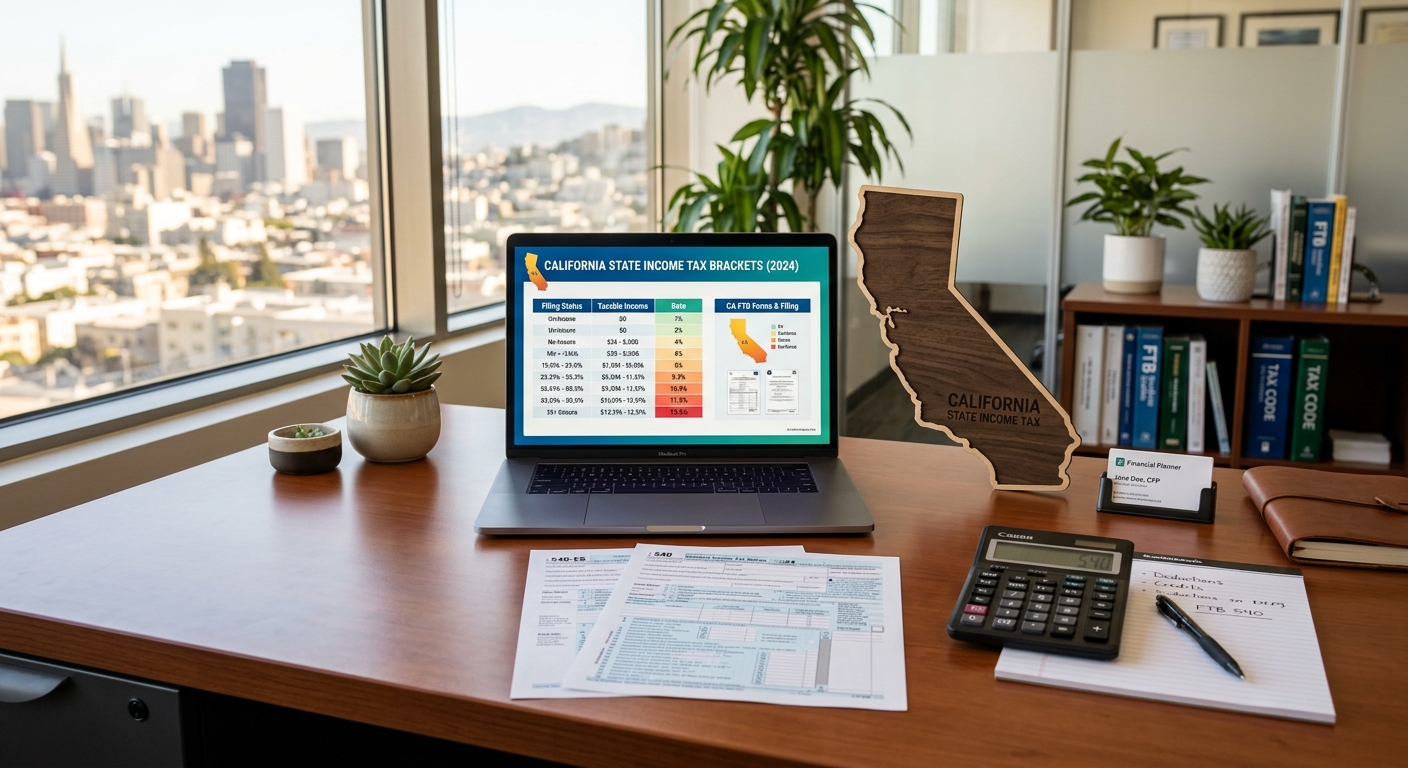
What Is the State Tax in California? The Numbers Every Taxpayer Needs to Know
California bills itself as the land of opportunity, but when tax season arrives, many residents discover they’re paying some of the highest state income taxes in the nation. If you’re earning W-2 income, running a business, or pulling rental income from California properties, understanding what is the state tax in California isn’t just helpful—it’s financially critical. The California Franchise Tax Board (FTB) operates one of the most aggressive tax collection systems in the country, with rates that can climb to 13.3% for high earners and residency rules that follow you even after you leave the state.
The mistake most taxpayers make? Assuming California’s state tax works like other states. It doesn’t. California uses a progressive tax bracket system with nine different income tiers, each with its own marginal rate. Add in the state’s unique residency tracking, part-year filing requirements, and alternative minimum tax rules, and you have a system designed to maximize revenue collection while leaving taxpayers confused about what they actually owe.
This information is current as of 4/13/2026. Tax laws change frequently. Verify updates with the IRS or FTB if reading this later.
Quick Answer
California’s state income tax ranges from 1% to 13.3% depending on your income level and filing status. For 2026, single filers pay 1% on the first $10,412 of taxable income, with rates increasing progressively until reaching the top 13.3% rate on income exceeding $698,271. Married filing jointly taxpayers face the same rate structure but with doubled income thresholds. These rates apply to all California residents and part-year residents for income earned while living in the state.
California State Tax Brackets for 2026: Where Your Income Actually Lands
Most taxpayers think they’re in “the 9% bracket” or “the 13% bracket,” but that’s not how California’s progressive tax system works. Your effective tax rate—what you actually pay—is almost always lower than your marginal rate because only the income in each bracket gets taxed at that bracket’s rate.
2026 California Tax Brackets (Single Filers)
| Taxable Income Range | Tax Rate | Tax Owed (on range only) |
|---|---|---|
| $0 – $10,412 | 1% | Up to $104.12 |
| $10,413 – $24,684 | 2% | $285.44 maximum on this bracket |
| $24,685 – $38,959 | 4% | $570.96 maximum on this bracket |
| $38,960 – $54,081 | 6% | $907.26 maximum on this bracket |
| $54,082 – $68,350 | 8% | $1,141.44 maximum on this bracket |
| $68,351 – $349,137 | 9.3% | $26,113.10 maximum on this bracket |
| $349,138 – $418,961 | 10.3% | $7,191.79 maximum on this bracket |
| $418,962 – $698,271 | 11.3% | $31,553.97 maximum on this bracket |
| $698,272+ | 13.3% | 13.3% on every dollar above threshold |
For married filing jointly taxpayers, each bracket threshold doubles. That means the 13.3% top rate doesn’t kick in until taxable income exceeds $1,396,542 for joint filers in 2026.
Real-World Tax Calculation Example
Sarah, a software engineer in San Francisco, earns $120,000 in taxable income as a single filer in 2026. Here’s what she actually pays in California state income tax:
- First $10,412 at 1% = $104.12
- Next $14,272 at 2% = $285.44
- Next $14,275 at 4% = $571.00
- Next $15,121 at 6% = $907.26
- Next $14,268 at 8% = $1,141.44
- Remaining $51,652 at 9.3% = $4,803.64
Total California state tax: $7,812.90
Sarah’s marginal rate is 9.3% (the rate on her last dollar earned), but her effective state tax rate is only 6.5% ($7,812.90 ÷ $120,000). This distinction matters when planning estimated tax payments or evaluating whether deductions are worth pursuing.
Part-Year Residents and the California Residency Trap
California doesn’t just tax current residents—it maintains an aggressive stance on tracking former residents who retain ties to the state. This creates a residency trap that catches thousands of taxpayers every year, especially those who relocate mid-year or maintain vacation properties in California.
What Makes You a California Resident for Tax Purposes?
According to the FTB, you’re a California resident if California is your permanent home—the place you intend to return to when absent. But here’s where it gets complicated: California also taxes “part-year residents” on all income earned while living in the state, plus California-source income earned after moving away.
Red Flag Alert: The FTB looks at nine different factors to determine residency, including where your driver’s license is issued, where your children attend school, where you’re registered to vote, where your doctor and dentist are located, and how much time you spend in California. Maintaining a vacation home in California while claiming Nevada or Texas residency? The FTB will audit this aggressively, especially if you’re a high earner.
California-Source Income That Never Escapes State Taxation
Even after you become a nonresident, California continues taxing income from:
- Rental properties located in California
- Business conducted within California state lines
- Salaries for work performed physically in California (even for out-of-state employers)
- Partnership or S corporation income from California-based businesses
- Sale of California real estate (including capital gains)
Michael relocated from Los Angeles to Austin in June 2026. He sold his LA rental property in October 2026, generating a $95,000 capital gain. Even though he’s a Texas resident when the sale closes, California still taxes that $95,000 gain because the property was located in California. At the 13.3% top rate, that’s a $12,635 California state tax bill despite living in a state with no income tax. For residents and business owners in Los Angeles, our tax preparation in Los Angeles team is ready to help you reduce your tax burden.
Business Owners: How California Taxes LLCs, S Corps, and Sole Proprietors
Running a business in California creates additional tax layers beyond personal income tax. Understanding these entity-level taxes is essential for proper tax planning and entity structuring decisions. If you’re navigating entity selection or optimization, exploring our tax planning services can help you minimize both state and federal tax exposure. For residents and business owners in San Diego, our CPA services in San Diego team is ready to help you reduce your tax burden.
The $800 Annual Franchise Tax Minimum
Every LLC and corporation registered in California owes an $800 minimum franchise tax annually, due by the 15th day of the 4th month after the beginning of the taxable year. This applies even if your business had zero income, operated at a loss, or was inactive.
Pro Tip: New LLCs and corporations get a one-time exemption from the $800 minimum for their first tax year, but only if that first year is 15 days or less. Form your entity on January 1st and you’ll owe $800 for that year. Form it on January 17th and you’re exempt until the following year.
Additional LLC Gross Receipts Fee
LLCs doing business in California face an additional annual fee based on total California-source gross receipts:
| California Gross Receipts | Annual LLC Fee |
|---|---|
| $250,000 – $499,999 | $900 |
| $500,000 – $999,999 | $2,500 |
| $1,000,000 – $4,999,999 | $6,000 |
| $5,000,000+ | $11,790 |
This fee is separate from and in addition to the $800 minimum franchise tax. An LLC with $600,000 in California gross receipts pays both the $800 franchise tax and the $2,500 LLC fee—a total of $3,300 annually just for the privilege of operating in California.
S Corporation Tax Treatment in California
Unlike federal tax law where S corporation income passes through to shareholders without entity-level taxation, California imposes a 1.5% entity-level tax on S corporation net income. This applies to California S corporations and out-of-state S corporations doing business in California.
The calculation works like this: California S corporation net income × 1.5% = entity-level tax due. This tax is paid by the S corporation itself, not the shareholders, though shareholders still pay personal income tax on their distributive share of S corporation income.
Jennifer operates an S corporation marketing agency in San Diego with $450,000 in net income for 2026. Her California S corporation tax calculation:
- $450,000 net income × 1.5% = $6,750 entity-level tax
- Plus $800 minimum franchise tax
- Total entity-level California tax: $7,550
Jennifer must also pay personal California income tax on her share of the S corporation income when it passes through to her individual return. If she owns 100% and is in the 9.3% marginal bracket, that’s an additional $41,850 in personal state tax ($450,000 × 9.3%), bringing her total California tax burden on business income to $49,400.
KDA Case Study: Small Business Owner
Marcus, a 1099 contractor running a one-person digital marketing consultancy in Oakland, came to KDA in February 2026 after receiving an FTB notice for unpaid estimated taxes. He’d earned $180,000 in 2025 but didn’t make any estimated tax payments, thinking he could settle up at filing time.
His California state income tax bill came to $12,450, but the FTB also assessed a 10% underpayment penalty ($1,245) and interest charges totaling $890. Total amount due: $14,585.
What KDA did: We restructured Marcus as an S corporation effective January 2026, setting a reasonable salary of $85,000 (leaving $95,000 as distributions). We implemented quarterly estimated tax payments using California Form 540-ES, calculated his exact safe harbor requirements to avoid future penalties, and negotiated a payment plan with the FTB for his 2025 liability.
Tax savings result: The S corporation structure reduced his self-employment tax by approximately $6,700 annually. We also identified $8,200 in previously missed business deductions including a home office deduction, vehicle expenses under actual cost method, and qualified health insurance premiums. Combined first-year savings: $14,900.
What he paid: $4,200 for entity formation, S election filing, bookkeeping setup, and tax planning.
ROI: 3.5x first-year return, with ongoing annual savings of approximately $10,000 in reduced self-employment and income taxes.
Ready to see how we can help you? Explore more success stories on our case studies page to discover proven strategies that have saved our clients thousands in taxes.
Standard Deduction vs. Itemizing: California vs. Federal Differences
California’s standard deduction amounts don’t match federal figures, creating a scenario where you might itemize on your federal return but take the standard deduction on your California return—or vice versa.
2026 California Standard Deduction Amounts
| Filing Status | California Standard Deduction | Federal Standard Deduction |
|---|---|---|
| Single | $5,363 | $15,000 |
| Married Filing Jointly | $10,726 | $30,000 |
| Head of Household | $10,726 | $22,500 |
Notice California’s standard deduction is roughly one-third of the federal amount. This significantly lowers the threshold at which itemizing makes sense on your California return.
What You Can Deduct on California Returns (That Differs from Federal)
California doesn’t conform to all federal tax code provisions, creating important differences:
State and local tax (SALT) deduction: While federal law caps SALT deductions at $10,000, California has no such cap. If you paid $35,000 in property taxes and state income taxes, you can deduct the full amount on your California return when itemizing.
Mortgage interest limitation: California follows the pre-2018 federal rules, allowing mortgage interest deduction on up to $1,000,000 of acquisition debt (federal limit is $750,000 for loans originated after December 15, 2017).
Miscellaneous itemized deductions: California still allows certain miscellaneous itemized deductions subject to the 2% of AGI floor that federal law eliminated in 2018, including unreimbursed employee business expenses for W-2 workers.
California Alternative Minimum Tax (AMT): The Shadow Tax System
California maintains its own Alternative Minimum Tax system separate from federal AMT. If you’re subject to California AMT, you’ll calculate your tax liability under both the regular tax system and the AMT system, then pay whichever amount is higher.
Who Gets Hit with California AMT?
California AMT typically affects taxpayers who:
- Claim large state and local tax deductions
- Exercise incentive stock options (ISOs) without selling the stock in the same year
- Have significant accelerated depreciation deductions
- Claim large miscellaneous itemized deductions
- Have high income with relatively few deductions
The California AMT rate is 7% on the first $232,668 of AMT income (for 2026) and 9.3% on AMT income exceeding that threshold. There’s an exemption amount that phases out at higher income levels, making the calculation complex.
Red Flag Alert: Exercising ISOs creates phantom income for AMT purposes—you’re taxed on the spread between the exercise price and fair market value even though you haven’t sold the stock and received no cash. This catches many tech workers by surprise, creating California AMT bills of $50,000+ with no liquidity to pay them.
Special Situations and Edge Cases
Military Members and California State Tax
Active duty military members maintain their state of legal residence regardless of where they’re stationed. If you’re a California resident serving in another state, you’ll still owe California income tax on your military pay. However, if you’re a legal resident of another state stationed in California, California cannot tax your military pay—only income from other sources like a spouse’s wages or rental income.
Remote Workers: Where Do You Owe Tax?
California uses a “source rule” for wage income, taxing compensation for work performed physically in California. If you’re a California resident working remotely for a New York employer, California taxes 100% of your wages. If you’re a Nevada resident who occasionally works in California (say, 30 days per year), California can tax the portion of your wages attributable to those 30 days.
Pro Tip: Keep detailed records of where you physically perform work—especially if you split time between California and other states. The FTB will demand documentation during an audit, and if you can’t prove where you worked, they’ll assume it was all California-source income.
Retirees: What Retirement Income Does California Tax?
California taxes most retirement income, including:
- 401(k) and traditional IRA distributions
- Pension income (including government pensions)
- Annuity income
- Rental income and capital gains
However, California does not tax Social Security benefits, which gives retirees a small advantage compared to the full inclusion of Social Security on federal returns for higher earners.
What Happens If You Miss This? The Cost of California Tax Noncompliance
The FTB operates one of the most aggressive tax collection agencies in the nation, with powers that sometimes exceed IRS authority.
Penalties and Interest You’ll Face
Failure to file penalty: 5% of the tax due per month (or partial month), up to a maximum of 25%. File your return 6 months late with a $10,000 balance due? That’s a $2,500 penalty.
Failure to pay penalty: 0.5% of the unpaid tax per month, up to 40 months. This applies even if you filed on time but didn’t pay the full amount owed.
Estimated tax penalty: Calculated quarterly based on the underpayment amount and IRS interest rates. For 2026, this penalty is running approximately 8% annually, charged from the date each quarterly payment was due until either the payment is made or the filing deadline, whichever comes first.
Interest charges: The FTB charges interest on all unpaid tax from the original due date until paid in full. Unlike penalties which are capped, interest continues accruing indefinitely at rates tied to the federal short-term rate plus 3%.
How the FTB Finds Unreported Income
California receives copies of all federal information returns—every W-2, 1099-NEC, 1099-INT, 1099-DIV, and 1099-K issued to California taxpayers. The FTB uses automated matching systems to compare reported income on your California return against these information returns.
If there’s a discrepancy, you’ll receive an FTB Notice of Proposed Assessment, which presumes the FTB’s calculation is correct. You have 60 days to protest and provide documentation showing why their assessment is wrong. Miss that deadline and the assessment becomes final, with collection proceedings starting immediately.
How Do I Reduce My California State Tax Liability?
While California’s high tax rates are non-negotiable, several strategic approaches can significantly reduce your total state tax bill.
Maximize Retirement Contributions
California allows deductions for contributions to traditional retirement accounts, including:
- Traditional IRA contributions (up to $7,000 for 2026, $8,000 if age 50+)
- 401(k) salary deferrals (up to $23,500 for 2026, $31,000 if age 50+)
- SEP-IRA contributions (up to 25% of compensation or $69,000, whichever is less)
- Solo 401(k) contributions (employee deferrals plus employer contributions up to $69,000)
A 45-year-old business owner in the 9.3% bracket who maxes out a Solo 401(k) at $69,000 saves approximately $6,417 in California state income tax (9.3% × $69,000), plus federal tax savings of $15,180 at the 22% federal bracket—a combined first-year tax reduction of $21,597.
Harvest Investment Losses Strategically
Capital losses offset capital gains dollar-for-dollar, and if losses exceed gains, you can deduct up to $3,000 against ordinary income annually (the excess carries forward to future years).
In a high-tax state like California, tax-loss harvesting becomes more valuable. Realizing a $30,000 capital loss when you’re in the 13.3% California bracket plus the 20% federal long-term capital gains bracket saves you approximately $9,990 in combined taxes ($30,000 × 33.3%).
Bunch Itemized Deductions into Alternating Years
Because California’s standard deduction is relatively low ($5,363 for single filers in 2026), bunching deductible expenses into alternating years can create tax savings. Make two years’ worth of charitable contributions, property tax payments, and other itemized deductions in one year to exceed the itemization threshold, then take the standard deduction in the following year.
Consider Entity Restructuring for Business Owners
The right entity structure depends on your specific income level, distribution plans, and long-term business goals. S corporations can reduce self-employment tax exposure for high-earning sole proprietors. C corporations might make sense for businesses retaining significant earnings. LLCs taxed as partnerships can offer flexibility for multi-owner situations.
There’s no one-size-fits-all answer, which is why professional guidance from a California-licensed CPA who understands both federal and state tax implications is critical before making entity elections.
Can I Avoid California State Tax by Moving?
Yes, but only if you truly sever California residency—and that’s harder than most people think.
Step-by-Step: How to Establish Residency in Another State
- Obtain driver’s license and vehicle registration in new state within 30 days of establishing residence
- Register to vote in new state and cancel California voter registration
- Update mailing address with IRS, banks, credit cards, and all financial institutions
- Establish primary doctor, dentist, and other professional relationships in new state
- Move valuable personal property (artwork, jewelry, family heirlooms) to new state
- Spend more than 183 days per year in your new state of residence
- Document your time with calendar records, receipts, and travel logs
- Sell California real estate if possible, or convert to rental and hire property manager
- Close California bank accounts and open accounts in new state
- Update estate planning documents to reflect new state residency
The FTB will scrutinize your residency claim, especially if you’re a high earner. Half measures won’t work—keeping your California driver’s license “just in case” or maintaining your primary residence in California while claiming to live elsewhere will result in an FTB audit you’ll lose.
Ready to Reduce Your Tax Bill?
KDA Inc. specializes in strategic tax planning for business owners, S Corps, LLCs, and high-net-worth individuals. Book a personalized consultation and walk away with a clear plan.
Frequently Asked Questions
Does California tax Social Security income?
No. California is one of 38 states that do not tax Social Security retirement benefits, regardless of your income level. However, other retirement income including 401(k) distributions, IRA withdrawals, and pension income is fully taxable at California’s ordinary income tax rates.
What is California’s sales tax rate?
California’s base state sales tax rate is 7.25%, but local jurisdictions add district taxes that can bring the combined rate to 10.75% in some areas. Los Angeles County rates range from 9.5% to 10.25% depending on the city. San Francisco is 8.625%. These are among the highest sales tax rates in the nation. KDA Inc. provides expert tax advisor in Orange County — book a free consultation to see how much you can save.
Do I need to file a California state tax return if I only worked there temporarily?
Yes, if you earned income from California sources, you must file a California nonresident or part-year resident return (Form 540NR) reporting that income. This applies even if you only worked in California for a few weeks or earned just a few thousand dollars. California taxes all income from work performed within the state, regardless of where your employer is located or where you live.
Can California tax my income if I moved mid-year?
Yes. As a part-year resident, you’ll file Form 540NR and pay California tax on all income earned while you were a California resident, plus any California-source income earned after you moved. Your move date matters significantly—document it carefully with lease agreements, moving receipts, and employment start dates in your new state.
What’s the deadline for California estimated tax payments?
California estimated tax payments follow the same schedule as federal: April 15, June 15, September 15, and January 15 of the following year. If any date falls on a weekend or legal holiday, the deadline moves to the next business day. Failing to make adequate estimated payments triggers underpayment penalties even if you pay your full tax liability by the April filing deadline.
Stop Overpaying California State Taxes
Understanding what is the state tax in California is just the beginning. The real question is whether you’re using every available strategy to minimize your California tax liability legally and effectively. Between entity structuring, retirement planning, strategic deduction timing, and residency planning, most California taxpayers leave thousands of dollars on the table every year.
If you’re earning six figures or running a business in California, professional tax guidance isn’t optional—it’s a financial necessity. The complexity of California’s tax system, combined with the FTB’s aggressive enforcement, means DIY tax preparation creates expensive risks.
Get a Personalized California Tax Reduction Strategy
You didn’t choose to live in a high-tax state because you enjoy paying more. You’re here for career opportunities, business advantages, or lifestyle preferences. But that doesn’t mean you should accept an unnecessarily high state tax bill. Book a tax strategy session with KDA’s California-licensed CPAs and discover exactly which deductions, credits, and strategies apply to your specific situation. We’ll show you the numbers—what you’re paying now, what you could be paying with proper planning, and the exact steps to get there. Click here to book your California tax strategy consultation now.



