
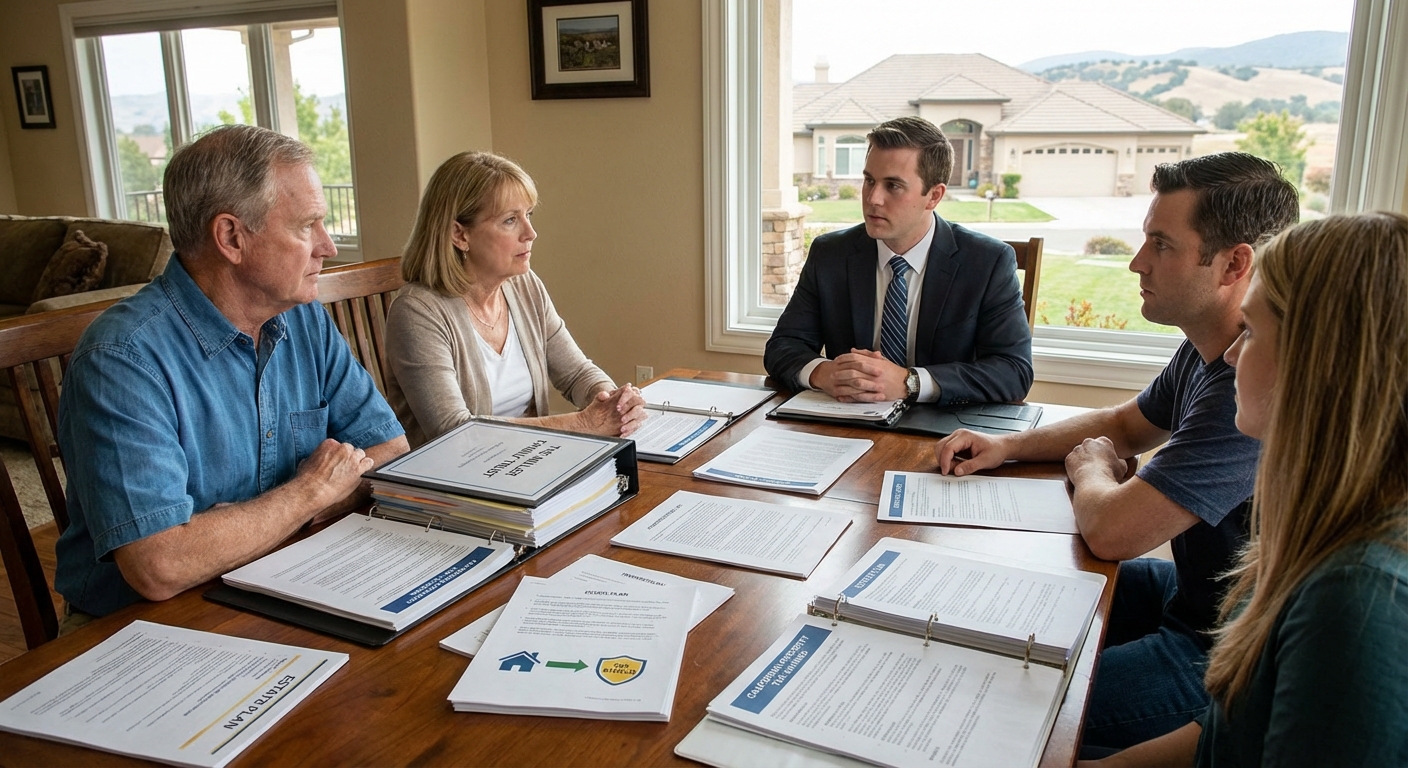
The Real Cost of Transferring Property to a Family Trust: How to Avoid a Lifetime of Hidden Taxes
Transferring real estate into a family trust is often sold as the ultimate solution for legacy planning in California. But hidden beneath the surface are costly property tax traps, reassessment risks, and compliance nightmares that can quietly drain six figures from your estate over time. Most families — and even many advisors — miss these details until it’s too late.
If you’re debating whether (or how) to pay taxes for property transferred to family trust, don’t rely on old advice or generic templates. You need a strategy that’s both IRS-proof and FTB-compliant for California’s unique laws in 2026 — or your heirs could face a surprise $97,000+ in avoidable taxes, fees, and penalties.
This information is current as of 1/7/2026. Tax laws change frequently. Verify updates with the IRS or FTB if reading this later.
Quick Answer: Do You Owe Taxes When Putting Property in a Family Trust?
For the 2025 tax year, transferring your California home or investment property into a revocable family trust generally does not trigger immediate federal or state income tax or property transfer tax. But the risk comes later — with property tax reassessment under Proposition 19, gift tax exposure, and stepped-up basis issues for your heirs.
Bottom line: The right trust, with the right documentation, protects your estate. The wrong move — or one missing form — can burden your family with long-term tax bills and erode generational wealth.
Why Family Trust Strategy Matters More Than Ever in 2026
Since the full implementation of California’s Proposition 19 in 2021, most property transfers — including those to family trusts — are now scrutinized for property tax reassessment by the county assessor. Before Prop 19, parents could pass down homes and up to $1 million in assessed value of other property with property tax protection. Now, the eligibility is much narrower, and the wrong paperwork can mean your $800,000 home gets reassessed to current market value (often $2M+) overnight.
- Example: If your parents bought their San Jose home in 1990 and its tax assessment is $330,000, local tax may be under $5,000/year. Pass it to you via the wrong trust, and the annual tax can jump past $22,000 — immediately.
The California Guide to Estate & Legacy Tax Planning details how new rules are impacting families this year — including which documents shield you, and which expose you to reassessment and excessive taxes.
Choosing the Right Family Trust: Revocable, Irrevocable, and Property Tax
Not all trusts are created equal. Here’s how different trust types affect California property tax, gift tax, and income tax:
- Revocable Living Trusts: Standard for most families. Don’t trigger property tax reassessment at transfer, as long as the settlor (creator) is still alive. But at death, property tax rules change.
- Irrevocable Trusts: Transferring real estate into an irrevocable trust is nearly always a “change in ownership” for property tax, triggering full reassessment unless for specific disabled/minor child or under unique circumstances.
- Grantor Trusts: For federal tax purposes, income remains reported on the grantor’s personal return, but property tax and estate implications depend on the trust terms.
Most families are told to “just put the home in a trust,” yet the wrong type can blow up your tax protection. That’s why our real estate investor clients rely on a legal/CPA team — not download-and-sign forms — to prevent reassessment and lock in decades of tax savings.
KDA Case Study: California Family Faces Six-Figure Reassessment
In March 2025, a married couple in San Mateo County, both high-earning W-2 medical professionals (combined income $650,000), approached KDA after their parents transferred a rental duplex into a poorly structured family trust. The parents, relying on generic trust documents, had failed to complete the critical “Parent-Child Exclusion” claim within 3 years of death, and the trust did not qualify under current rules since the property was not the primary residence of the parents or children.
The county reassessed the rental property from its $430,000 original assessment to $1.9M fair market value. Overnight, annual property taxes rose from $6,900 to $27,000 — an instant $20,100/year loss. The children, facing a three-year look-back period and over $60,000 in owed taxes and penalties, would have needed to sell one of the rental units to cover the unexpected liability.
KDA was able to unwind the transfer, file for partial reassessment relief with expert documentation, and prepare a restructured revocable trust using a combination of a legal and advanced tax planning approach. The family ultimately saved $68,000 in back taxes and preserved the property with the original assessment for one more generation.
Ready to see how we can help you? Explore more success stories on our case studies page to discover proven strategies that have saved our clients thousands in taxes.
The Surprise Tax Traps When Transferring Property into a Family Trust
Most people fixate on capital gains or probate, but here are the real tax surprises most Californians forget when transferring property to a family trust in 2026:
- Property Tax Reassessment Trap: If the trust is not properly drafted, or you miss deadlines for parent-child exclusions, your home loses its Prop 13 protection — and your property tax jumps to market value rates instantly.
- Gift Tax Surprise: Transferring a property into an irrevocable trust — or gifting to children/grandchildren — is a “completed gift” with potential federal gift tax reporting on Form 709. This rarely triggers actual tax under the current $13.2M lifetime exemption (2026), but mistakes are audited.
- Capital Gains Basis Error: If property is gifted during life, your children or heirs take your basis (often low), facing hefty taxes if the property is later sold. But assets passed at death — via a revocable trust — get a “stepped-up basis” (reset to market value), often saving $200,000+ in taxes.
For those doing multi-property planning, a tax planning services consultation is critical before executing major transfers. That’s because IRS and FTB rules change every year, and uncoordinated moves can sabotage your entire estate plan.
Pro Tip: How to Calculate ‘True’ Tax on Property Transfers — It’s Not What You Think
Many families try to “DIY” this strategy by simply signing a quitclaim deed. But the true cost is buried in the future property tax, capital gains on resale (if basis is not adjusted), and even the effect on Medi-Cal or other benefit eligibility. To get a ballpark estimate of what an inherited property could cost you, use this capital gains tax calculator — but remember: property tax is a separate calculation with its own maze of CA rules.
What To File, When, and With Whom: Step-By-Step Compliance
- Property Transfer to Revocable Trust (no immediate change): File a preliminary change of ownership report (PCOR) with your county
- Property Transfer to Children/Heirs: Complete the “Parent-Child Exclusion” form within required time limits to preserve Prop 13 rates. Delay = automatic reassessment
- Federal Disclosure: If the transfer is a gift (irrevocable), file IRS Form 709 in the year of transfer
- Income Tax: No change until sale or later event; capital gains only owed when property is sold, NOT at trust transfer, and only on the difference between basis and sale price (see IRS Publication 559)
Red Flag Alert: Failing to file within the allowed period after death or gift means your inherited home could be hit by not only reassessment, but penalties of up to 20% of the additional tax, payable immediately. This is when the FTB and county add insult to injury. Don’t cut corners on this documentation.
FAQ: Timing, Cost, and Mistakes to Avoid With Family Trust Property Transfers
How much does it really cost to set up a family trust for property transfers in California?
Done right, a full trust and property transfer plan — including deed work, IRS/FTB compliance, and spouse/child protection — costs $3,000–$7,500 with a top-tier legal + CPA team. That’s a drop in the bucket next to $100K+ in taxes it can prevent.
Do I pay capital gains tax when placing property in trust?
No, as long as the transfer is to a revocable trust and there is no sale. Capital gains are deferred until the property is sold, and basis is set at time of sale or at the owner’s date of death if inherited. See IRS Pub 523 for details on the gain exclusion rules.
How do property tax rules differ for investment property?
Investment/rental properties transferred at death may lose Prop 13 protection unless inherited by a child who moves in. Otherwise, expect full assessment to current market value — and a steep tax hike — unless your plan qualifies under an explicit exclusion. Check updated California BOE guidance, as the rules evolve every year.
Why Good Families Get Bad Tax News: The Compliance Danger Nobody Talks About
Many Californians find out too late that property tax protection is not automatic. The paperwork is now heavily scrutinized by county assessors (especially for high-value property and multi-heir trusts), and all exclusions are tightly policed post-Prop 19. If your trust, deeds, and filings don’t line up, your heirs face a tax avalanche that can devastate your legacy.
If you’re a business owner or real estate investor, poor trust planning puts commercial and residential properties at risk of instant tax escalation. Business owners with real assets must coordinate entity structure, trust formation, and tax elections in one integrated plan — or lose multi-layered protection.
Social Mic Drop
The IRS and FTB aren’t hiding the rules — most families just never see the right blueprint. A bad property transfer could cost your heirs their future home.
Top 3 Takeaways for Savvy Heirs and Estate Planners
- Not all trusts protect you from property tax reassessment. Only targeted revocable trusts (and the correct forms) shield homes under California law post-Prop 19.
- Act fast after a parent passes. Missed paperwork = six-figure tax hits. Get professional help within months, not years.
- Cheap trust templates can wipe out generational wealth. Top-tier strategy pays for itself — and then some.
Summary FAQ: Fast Facts When Transferring Property to Family Trusts in California (2026)
Does transferring my home to a family trust trigger property tax reassessment?
Usually no, if it’s a revocable trust and you’re still living. But at death or for investment property, reassessment applies unless you qualify under the latest exceptions.
Am I taxed when moving property into a family trust?
Not for income tax — but watch out for gift and property tax triggers depending on trust type and paperwork timing.
What if my property’s already in a trust, but not the right kind?
It may be possible to restructure or “fix” a trust, but speed is critical to avoid permanent tax damage. Consult a specialist before transferring or selling.
Book Your Legacy-Saving Tax Strategy Session
If you’re nervous about losing your Prop 13 tax protection or leaving a six-figure penalty for your heirs, it’s time to get a real plan. Book a personalized estate and property transfer session with a KDA strategist. We’ll review your existing trust, map out hidden tax triggers, and design a step-by-step plan that keeps your property in the family — without a surprise bill from the FTB. Click here to secure your session now.



