
Thousands of Americans file tax returns they don’t legally owe, while thousands more skip filing and miss out on refunds worth hundreds or thousands of dollars. The reason? Confusion over minimum income for income tax filing requirements. With 2026’s new tax laws expanding deductions and introducing bonus breaks for seniors, overtime workers, and tip earners, understanding when you must file has never been more critical.
The stakes are real. If you earn below certain thresholds, you may not be required to file, but you could be leaving money on the table. If you’re over the limit and skip filing, you’re risking IRS penalties, loss of future Social Security credits, and blocked access to loans or government benefits that require proof of income.
Quick Answer
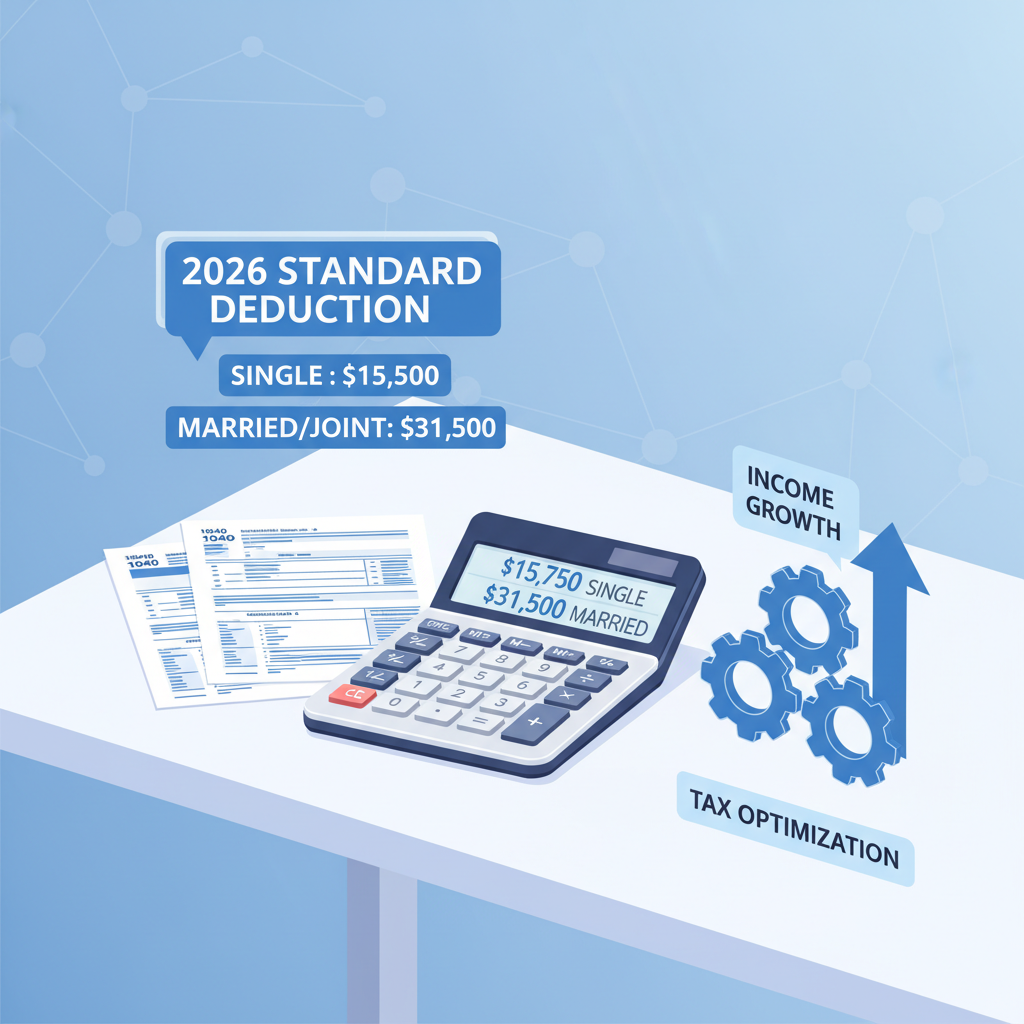
The minimum income for income tax filing in 2026 depends on your filing status and age. For single filers under 65, the threshold is $15,750. For married couples filing jointly under 65, it’s $31,500. Self-employed individuals must file if net earnings exceed $400, regardless of age or filing status. These amounts reflect the 2026 standard deduction increases under the One Big Beautiful Bill Act.
2026 Federal Income Tax Filing Thresholds by Status
The IRS sets minimum income requirements based on your filing status, age, and income type. Here’s exactly when you’re legally required to file a 2025 tax return in 2026.
Single Filers
If you’re single and under age 65, you must file if your gross income was at least $15,750 in 2025. This threshold increases to $17,750 if you’re 65 or older, thanks to the additional standard deduction of $2,000 for seniors.
Example: Maria, 28, works as a graphic designer and earned $14,200 in W-2 wages in 2025. She’s not required to file. But if her employer withheld federal taxes from her paychecks, she should file anyway to claim her refund.
Married Filing Jointly
Married couples filing jointly must file if their combined gross income was at least $31,500 (both spouses under 65). If one spouse is 65 or older, the threshold rises to $33,100. If both are 65 or older, it increases to $34,700.
Red Flag Alert: If you’re married but filing separately, the threshold drops to just $5 of gross income. This means nearly all married taxpayers filing separately must file a return, regardless of their actual earnings.
Head of Household
Head of household filers under 65 must file if gross income reaches $23,650. For those 65 or older, the threshold is $25,650.
Pro Tip: Head of household status offers higher standard deductions than single filing status. Make sure you qualify by meeting IRS requirements: you must be unmarried, pay more than half the household costs, and have a qualifying dependent living with you for more than half the year.
Qualifying Surviving Spouse
If you qualify as a surviving spouse, you must file if your gross income was at least $31,500 (under 65) or $33,100 (65 or older).
Self-Employment Changes Everything
The standard income thresholds don’t apply if you’re self-employed. If you had net earnings from self-employment of $400 or more in 2025, you must file a return, even if your gross income is well below the standard deduction.
This $400 threshold applies to all self-employment income, including gig work reported on Form 1099-NEC, freelance income, side hustles, contract work, and rental property income where you materially participate in management.
What Counts as Net Earnings?
Net earnings are your total business income minus allowable business expenses. It’s not your gross receipts. This distinction matters.
Example: James drives for a rideshare company part-time. He earned $8,500 in gross fares in 2025. After deducting mileage ($4,200), phone expenses ($480), and car washes ($300), his net self-employment income is $3,520. He must file because his net earnings exceed $400, even though his W-2 income from his day job is only $12,000.
James must also pay self-employment tax on his rideshare income, which covers Social Security and Medicare contributions that aren’t withheld from 1099 income.
KDA Case Study: W-2 Employee with Side Income
Rachel, a 32-year-old administrative assistant in Sacramento, earned $38,000 from her W-2 job in 2025. She also started a weekend photography business that generated $6,800 in gross revenue. After legitimate business deductions for equipment ($1,200), software subscriptions ($360), and mileage to shoots ($980), her net self-employment income was $4,260.
Rachel initially planned to skip filing because her photography income “wasn’t that much.” During a consultation with KDA, we explained that her $4,260 net self-employment income triggered a mandatory filing requirement due to the $400 threshold. We also identified additional deductions she’d missed, including home office expenses ($900) and professional development courses ($450), reducing her taxable self-employment income to $2,910.
The result: Rachel saved $1,340 in federal and California taxes in year one. She paid $800 for our tax preparation and strategy session, giving her a first-year ROI of 1.7x. More importantly, she avoided potential penalties for failure to file and now has a compliant record-keeping system for her growing photography business.
Ready to see how we can help you? Explore more success stories on our case studies page to discover proven strategies that have saved our clients thousands in taxes.
New 2026 Tax Breaks That Affect Filing Decisions
The One Big Beautiful Bill Act introduced several new deductions that change the math on whether filing makes sense, even if you’re below the minimum income thresholds.
Tips Income Exclusion
If you received credit card tips in 2025, you can now exclude up to $12,500 of that tip income if you’re single, or $25,000 if married filing jointly. This exclusion doesn’t apply to cash tips.
Key Takeaway: If your only income was $14,000 in credit card tips and you’re single, you’re technically below the standard deduction. But you should still file to document the exclusion and protect yourself from future IRS questions about unreported income.
Overtime Pay Deduction
Overtime income earned in 2025 can now be deducted up to $12,500 for single filers and $25,000 for married couples filing jointly. This creates interesting filing scenarios.
Example: David, 29, earned $48,000 in regular wages plus $8,000 in overtime pay in 2025. His gross income is $56,000, well above the filing threshold. But with the overtime deduction, he can reduce his taxable income by $8,000, dropping his adjusted gross income to $48,000. After the standard deduction of $15,750, his taxable income falls to $32,250. If he had skipped filing, he’d miss out on the refund from overwithholding throughout the year.
Senior Bonus Deduction
Taxpayers 65 or older are now eligible for an additional $6,000 deduction ($12,000 for married couples where both qualify). This deduction is available whether you take the standard deduction or itemize.
The deduction phases out for taxpayers with modified adjusted gross income over $75,000 ($150,000 for joint filers). For California retirees with moderate pension and Social Security income, this can eliminate tax liability entirely.
Pro Tip: If you turned 65 in 2025, you’re considered 65 for the full tax year if your birthday was on or before January 1, 2026. This means you qualify for both the additional standard deduction and the new senior bonus deduction.
Our tax planning services help seniors maximize these new breaks while coordinating retirement account withdrawals to stay below phase-out thresholds.
Dependent Children and Income Requirements
If you can be claimed as a dependent on someone else’s tax return, different rules apply. Your filing requirement depends on your earned income, unearned income, and gross income.
Single Dependents Under 65
You must file if any of these apply:
- Your unearned income (interest, dividends, capital gains) was more than $1,300
- Your earned income (wages, salary, tips) was more than $15,750
- Your gross income was more than the larger of $1,300 or your earned income (up to $15,400) plus $400
Example: Tyler, 19, is a college student claimed as a dependent by his parents. He earned $9,200 working part-time and received $450 in interest from a savings account. His gross income is $9,650. To determine if he must file, we use this formula: the larger of $1,300 or his earned income ($9,200) plus $400 equals $9,600. Since his gross income ($9,650) exceeds $9,600, he must file.
When You Should File Even If You’re Not Required To
Just because you don’t have to file doesn’t mean you shouldn’t. Here are situations where filing makes financial sense.
You Had Federal Income Tax Withheld
If your employer withheld federal taxes from your paycheck, filing is the only way to get that money back. The IRS doesn’t automatically refund overwithholding.
Example: Jessica earned $13,400 in 2025. Her employer withheld $840 in federal taxes throughout the year. She’s not required to file, but if she doesn’t, she loses that $840 permanently.
You Qualify for Refundable Tax Credits
Several tax credits are refundable, meaning you can receive them even if you owe no tax. These include:
- Earned Income Tax Credit (EITC): Worth up to $8,046 for families with three or more children in 2025
- Additional Child Tax Credit: Refundable portion of the Child Tax Credit, up to $1,700 per child
- American Opportunity Tax Credit: Up to $1,000 refundable per student for qualified education expenses
The PATH Act requires the IRS to hold EITC and Additional Child Tax Credit refunds until mid-February. If you’re eligible for these credits, you must file to receive them, regardless of your income level.
You Want to Build a Tax Filing History
Filing establishes a documented income history that matters for:
- Mortgage applications and loan approvals
- Social Security credit accumulation (especially important for self-employed individuals)
- Financial aid applications for education
- Immigration applications requiring proof of financial stability
You Made Estimated Tax Payments
If you made quarterly estimated tax payments in 2025, you must file to claim credit for those payments or receive a refund if you overpaid.
California-Specific Filing Considerations
California has separate filing requirements that don’t always align with federal thresholds. For 2025, you must file a California tax return if your gross income exceeds:
- Single or married filing separately: $20,721
- Married filing jointly or qualifying surviving spouse: $41,442
- Head of household: $31,081
These amounts are higher than federal thresholds, which creates an interesting scenario: you might be required to file federally but not for California, or vice versa.
California-Only Filing Situations
Red Flag Alert: California taxes all income earned while you’re a California resident, even if you’re below federal filing thresholds. If you moved to California mid-year, you may need to file a part-year resident return even with relatively low income.
California also doesn’t recognize several federal tax breaks, including the new overtime and tips exclusions. You’ll need to add those amounts back when calculating California taxable income, which could push you above California’s filing threshold even if your federal return shows minimal tax.
What Happens If You Don’t File When Required?
Failing to file when you’re legally required to carries serious consequences beyond just owing money.
Failure-to-File Penalty
The IRS charges 5% of unpaid taxes for each month or partial month your return is late, up to a maximum of 25%. If your return is more than 60 days late, the minimum penalty is $510 or 100% of your unpaid tax, whichever is less.
Example: You owe $4,000 in taxes and file four months late. Your failure-to-file penalty is $800 (5% × $4,000 × 4 months), plus interest on both the tax and the penalty.
Lost Social Security Credits
Self-employed individuals only receive Social Security credits when they file tax returns and pay self-employment tax. If you don’t file, those earnings don’t count toward your future Social Security retirement benefits or disability coverage. This is particularly damaging for freelancers and gig workers who may have inconsistent income.
Statute of Limitations Never Starts
The IRS generally has three years from your filing date to audit your return or assess additional tax. But if you never file, the statute of limitations never begins. The IRS can come after you for unfiled returns from decades ago.
Special Filing Requirements You Might Not Know About
Several situations trigger filing requirements regardless of your income level.
Health Savings Account Distributions
If you took distributions from a Health Savings Account (HSA) in 2025, you must file Form 8889 with your tax return, even if you’re below the income threshold. Using HSA funds for non-qualified medical expenses creates taxable income and a 20% penalty.
Household Employment Taxes
If you paid a household employee (nanny, housekeeper, gardener) $2,700 or more in 2025, you must file Schedule H with your tax return to report and pay household employment taxes, regardless of your other income.
Received Advance Premium Tax Credit Payments
If you received advance payments of the Premium Tax Credit to help pay for health insurance through a marketplace, you must file Form 8962 to reconcile those payments, even if your income is below the filing threshold.
Failing to file when you received advance premium tax credit payments can make you ineligible for future subsidies and trigger demands for repayment of the full credit amount.
State and Local Filing Rules May Differ
Federal filing thresholds don’t determine state or local obligations. Many states have different income thresholds and don’t recognize certain federal deductions.
In California, the state doesn’t conform to the new federal overtime pay deduction or tips income exclusion. That means even if these breaks reduce your federal taxable income below filing thresholds, you may still need to file in California.
Pro Tip: If you’re required to file federally but not for California, you should still consider filing both. California residents often benefit from state-level credits like the California EITC, Young Child Tax Credit, and Renter’s Credit that require filing to claim.
Ready to Reduce Your Tax Bill?
KDA Inc. specializes in strategic tax planning for business owners, S Corps, LLCs, and high-net-worth individuals. Book a personalized consultation and walk away with a clear plan.
Frequently Asked Questions
Do Social Security benefits count toward the minimum income threshold?
It depends. Social Security benefits are included in gross income calculations, but only the taxable portion counts. For many retirees with modest income, Social Security isn’t taxable. If Social Security is your only income, you typically don’t need to file. But if you have other income sources (pensions, investment income, wages), up to 85% of your Social Security benefits may become taxable, potentially pushing you above filing thresholds.
What if I’m married but my spouse and I lived apart all year?
If you’re legally married but didn’t live with your spouse at any time during the last six months of 2025, you may qualify to file as head of household instead of married filing separately. This significantly raises your filing threshold from $5 to $23,650 and gives you access to better tax rates and deductions.
Can I file jointly with my spouse if only one of us had income?
Yes. Married couples can file jointly regardless of whether one spouse had zero income. This is usually beneficial because it gives you access to the $31,500 standard deduction and typically results in lower tax rates than filing separately.
Book Your Tax Strategy Session
Not sure if you’re required to file, or wondering whether you’re leaving money on the table by not filing? The minimum income for income tax rules are more complex than they appear, especially with 2026’s new deductions and credits. Our tax strategy team can review your specific situation, identify every deduction and credit you qualify for, and ensure you’re filing correctly while keeping more of what you earn. Click here to book your consultation now.
This information is current as of 2/26/2026. Tax laws change frequently. Verify updates with the IRS or California Franchise Tax Board if reading this later.


