
Most Australian taxpayers quietly hand the Australian Taxation Office thousands of extra dollars every year because they are scared of “doing it wrong”. Fear of audits, confusion about what counts as a business expense, and half remembered advice from a friend at work all combine into one result: you pay more tax than the rules actually require.
The reality is that the tax law in both Australia and the United States rewards people who keep records and understand the rules. If you learn **how to maximize tax deductions australia** within the framework the ATO and IRS already give you, you can reduce your bill without playing games or risking penalties.
Quick Answer
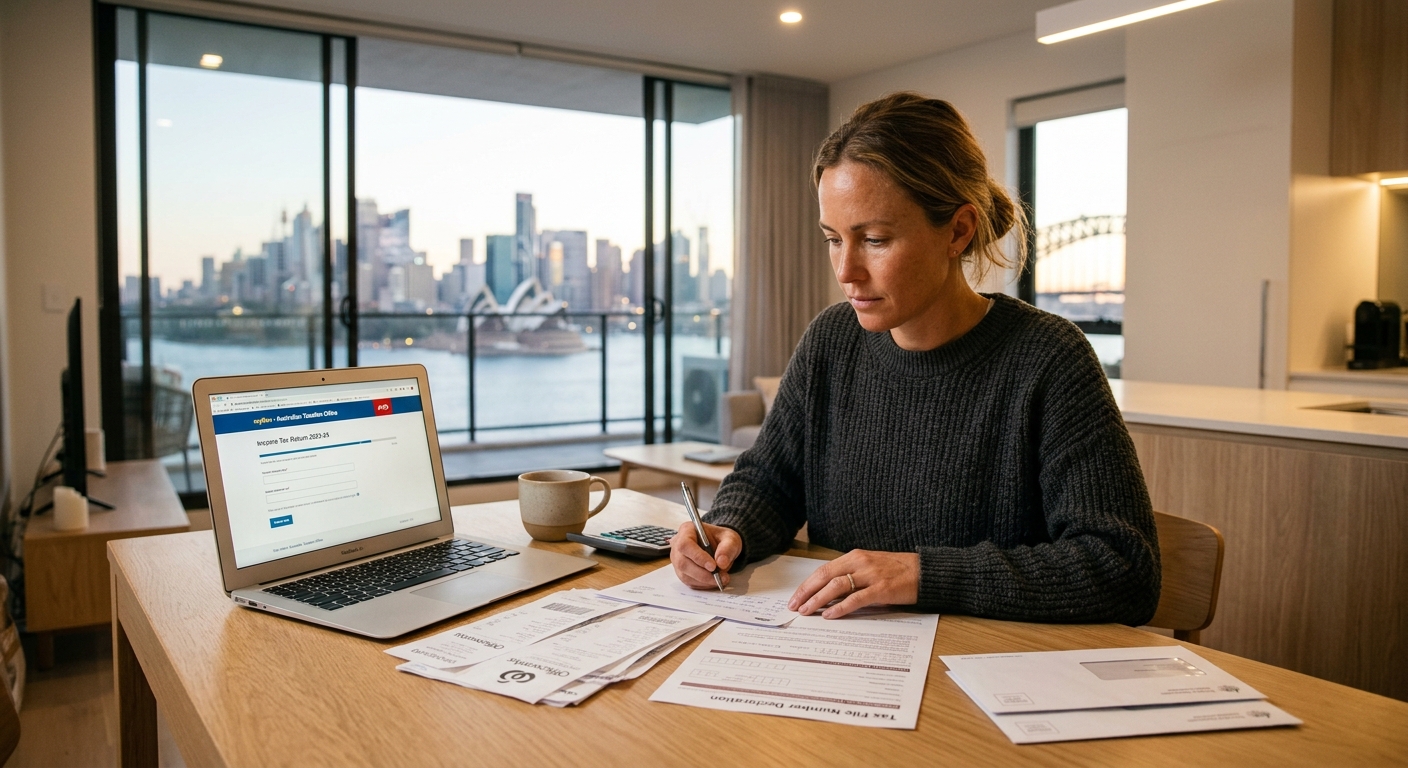
To maximize your tax deductions in Australia, you need three things: clear separation between personal and income producing costs, consistent record keeping, and the right method for each deduction category such as home office, car, and work related self education. Combine that discipline with periodic strategy sessions so you align your spending and investing with the rules, and you stop leaving easy money on the table every year.
Understand What “Tax Deductible” Really Means
Before you can decide how to maximize tax deductions australia wide, you need to understand what a deduction is in plain language. For both the ATO and the IRS, a deductible expense is generally a cost you incur in earning assessable income that is not private, domestic, or capital in nature.
In Australia, think about a contractor who earns 150,000 AUD a year. If they spend 12,000 AUD on tools, protective clothing, work related phone usage, and professional memberships that all fit the ATO’s “necessary for earning income” rule, that 12,000 AUD reduces taxable income to 138,000 AUD. At a marginal tax rate near 34.5 percent, that saves about 4,140 AUD in tax. The principle is the same as the US guidance in IRS Publication 535, which talks about ordinary and necessary business expenses.
The key is to stop thinking in terms of what feels “work related” and instead tie every deduction to one of three questions:
- Does this cost directly help me earn income?
- Is there a clear business reason any tax officer would understand?
- Can I prove the amount and the connection with a document or log?
If you cannot answer yes to all three, treat that cost as personal. Conservative decisions on the fuzzy items give you more room to be assertive where the law is clearly in your favor.
Work From Home Deductions And Remote Work Reality
Remote work changed everything, but most people still underestimate what they can claim. The ATO offers different methods for claiming home office and work from home expenses. In many ways this mirrors the US home office rules described in IRS Publication 587 and business use of home discussions for Schedule C filers.
Here is how to evaluate which approach gives you the highest legal deduction:
1. Fixed rate method for simplicity
Under the ATO’s fixed rate approach, you claim a set rate per hour for additional running costs such as electricity, gas, and small office items. If you work 1,000 hours from home in a year and the applicable rate is 0.67 AUD per hour, that alone produces a 670 AUD deduction. For a W 2 style salaried employee equivalent, that might save roughly 200 AUD in tax without tracking every light bulb and power bill.
2. Actual cost method for serious home offices
If your home office is a dedicated space and you track everything carefully, the actual cost method often produces a bigger deduction. You calculate the floor area of your office as a percentage of the total home, then apply that percentage to allowable costs such as electricity, internet, and sometimes occupancy expenses. The US system does something similar for self employed people, again explained in IRS guidance, even if the numbers differ.
Consider an engineer working in Melbourne who uses one room of a four room apartment exclusively as a home office. If rent and utilities total 30,000 AUD a year and that room represents 25 percent of the floor area, the business share is 7,500 AUD. Add 800 AUD in dedicated office furniture and equipment and you have 8,300 AUD of possible deductions. At a 37 percent marginal rate, that can save over 3,000 AUD in tax in a single year.
Pro Tip: If you are self employed or run a side business, the discipline needed for the actual cost method often overlaps with what sophisticated self employed professionals already do for their bookkeeping. When in doubt, track first and decide your method later.
Because the rules are complex, many higher earning individuals benefit from formal planning. Strategic reviews like the ones we provide through our tax planning services and our broader California business owner tax strategy hub can be adapted to Australian or US settings so you do not miss home office opportunities.
Cars, Travel, And Mixed Use Assets
Vehicle and travel deductions are where taxpayers either save thousands or attract questions. The ATO and IRS both accept that using a car for work can be deductible, but both are strict about personal versus business use. US rules are detailed in IRS Publication 463, and the ATO has its own guidance on logbooks and cents per kilometre methods.
Choosing the right method for your car
Suppose you drive 20,000 kilometres in a year and 8,000 kilometres are work related site visits for your contracting business. If you use the ATO’s cents per kilometre method at, say, 0.85 AUD per kilometre (subject to current limits), you can claim 6,800 AUD. At a one third marginal tax rate, this can cut your bill by around 2,200 AUD.
Alternatively, if you maintain a logbook and your actual operating costs are high fuel, insurance, servicing, depreciation the logbook percentage method may produce a bigger deduction. A small business owner who spends 14,000 AUD annually to own and run a vehicle with 40 percent business use could justify a 5,600 AUD deduction. That may be worth an extra several hundred dollars over the standard per kilometre rate.
Business travel without drama
Travel for conferences, client meetings, or property inspections is often deductible. The trap is mixing too much personal holiday into the same trip without separating costs. Best practice is to keep flights, hotels, and ground transport for business days clearly documented and booked separately from any private extensions.
Imagine a real estate investor who flies from Sydney to Brisbane to inspect three rental properties and meet with a property manager. If return flights cost 500 AUD, two hotel nights cost 360 AUD, and rides between sites cost 140 AUD, that 1,000 AUD total is generally deductible against rental income. If they add a long weekend holiday afterward, those extra nights and tourism costs are not deductible.
Red Flag Alert: Claiming 100 percent of car or travel costs when your logbook, diary, and calendar show obvious personal usage is exactly the kind of mismatch that catches attention, whether the auditor is from the ATO or the IRS.
KDA Case Study: Remote Professional Maximizes Deductions
Consider Emma, a high income software engineer who splits time between Sydney and San Francisco while consulting remotely for global clients. In one recent year she earned the equivalent of 280,000 AUD, but her prior accountant had her taking only basic work related deductions and a small home office claim. Her effective global tax rate sat near 33 percent.
When Emma engaged our advisory team, we treated her situation the same way we would approach a complex US return. We rebuilt her year using home office logs, travel records, contractor expenses, and better allocation of mixed use items. On the Australian side we shifted her to an actual cost method for a dedicated office room, documented a compliant car logbook that supported a 40 percent business use split, and reclassified several technology purchases from “personal” to legitimate income producing assets. On the US side we coordinated those positions with Schedule C reporting and home office rules.
The result was an increase of roughly 32,000 AUD in allowable deductions, dropping her combined taxable income by that amount. Based on her blended marginal rates across the two systems, the strategy saved her the equivalent of about 10,500 AUD for that year alone. Her advisory fee for the project and ongoing quarterly planning came to about 3,600 AUD, giving her a first year return on investment close to 2.9 times what she paid. More importantly, she left the engagement with a documented system for tracking expenses and a clear understanding of which habits would keep her compliant and efficient going forward.
Ready to see how we can help you? Explore more success stories on our case studies page to discover proven strategies that have saved our clients thousands in taxes.
Medical, Education, And Retirement Contributions
Beyond day to day work expenses, many people miss out on longer term deduction and offset opportunities. While the specific labels differ between Australia and the United States, the core planning ideas are similar.
Medical and health related costs
Australia no longer has the broad medical expenses tax offset that existed in previous years, but targeted rules can still help in specific situations such as net medical expenses for disability aids or aged care. In the US, medical deductions live on Schedule A if you itemize and only amounts above a percentage of adjusted gross income are deductible. Understanding the thresholds on both sides of the Pacific helps you decide whether bunching elective procedures into a single year makes sense for you.
For example, if a family expects 9,000 AUD of orthodontic and specialist costs for a child in the next two years, front loading those costs into one tax year may trigger more favorable treatment than spreading them thinly, especially if combined with other deductible items.
Self education and upskilling
Courses and certifications that directly relate to your current job or business often qualify as self education deductions in Australia. Short courses that make you more effective in your existing role, conferences that maintain a professional registration, and advanced degrees that build on your current work are prime candidates.
Picture a project manager who spends 4,500 AUD on a recognized certification program and 1,200 AUD on associated travel and textbooks. If those expenses meet ATO tests that the course maintains or improves skills in her current job, the full 5,700 AUD may be deductible. That could save around 1,800 AUD in tax at a higher marginal rate. By contrast, a course that moves her into a new career path is more likely treated as private and non deductible.
Retirement contributions and global coordination
Voluntary superannuation contributions in Australia often generate deductions or tax offsets subject to annual caps, similar in spirit to deductible contributions to traditional IRAs or 401(k) plans in the US. The exact numbers change regularly, so always check current limits. For taxpayers who earn both Australian and US sourced income, planning the mix of deductible versus non deductible contributions across both systems can materially lower lifetime tax.
This is where a holistic plan, not just a quick tax return, matters. If you want a rough sense of what an extra 10,000 AUD salary sacrifice into super would do to your federal US liability when you also have stateside income, you can model part of the picture with a simple tool like our federal tax calculator before you sit down with a strategist.
Common Mistakes That Trigger Audits Or Lost Deductions
Many taxpayers know in theory how to maximize tax deductions australia wide, but end up either claiming too little because they are afraid, or too much because they copy examples they do not fully understand. Both mistakes are avoidable.
Mixing personal and business without evidence
Buying a new laptop, phone, or tablet almost always has some business use today, but that does not make the entire cost deductible. The ATO and IRS both expect an allocation that reflects actual income producing use. If you claim 100 percent for a device your family clearly shares, you are inviting hard questions. A simple usage diary or built in screen time reports can support a more realistic split, such as 60 percent business and 40 percent private.
No documentation for “estimated” deductions
Rounded numbers are a classic red flag. Claiming exactly 5,000 AUD for car expenses, 2,000 AUD for home office, and 3,000 AUD for tools without a single supporting logbook, bill, or receipt looks like guessing. Auditors do not expect perfection, but they do expect that you can show how you arrived at your figures.
Poor coordination between countries
For Australians with US connections, such as holding a green card or filing a US return because of investments, the biggest risk is not double taxation itself but uncoordinated decisions. Taking a deduction in one country that is disallowed or neutralized in the other, mis timing income recognition, or misunderstanding treaty rules can cost more than any single missed receipt. That is exactly why complex earners should treat compliance as a cross border project, not two separate checklists.
Will Aggressive Deductions Trigger An Audit?
It is natural to worry that claiming everything you are entitled to will invite extra scrutiny. In practice, risk comes more from patterns than from single items. Authorities in both countries use data analytics to flag returns that look out of step with peers who have similar income, industries, and circumstances.
If a typical contractor in your field reports business expenses equal to 20 to 35 percent of income and you consistently report 80 percent, your chance of a review rises. On the other hand, a salaried software engineer who claims a well documented home office, realistic self education, moderate car use, and clear professional memberships is unlikely to stand out.
The safest approach is to be as aggressive as the law allows while staying completely truthful and organized. That is exactly how professional advisory firms operate. We would rather help a client claim 25,000 AUD in bulletproof deductions than 40,000 AUD in numbers that fall apart under questions.
How To Build A Year Round Deduction System
Maximizing deductions is not something you do once in April. It is a habit you run all year. The most efficient taxpayers whether in Sydney, Melbourne, or Los Angeles tend to follow the same playbook.
1. Decide on your tracking tools
Use one ecosystem for everything. That might be accounting software, a simple spreadsheet, or a secure digital folder for receipts. What matters is consistency. Set up folders for categories such as home office, car, travel, self education, and tools so you do not have to reinvent the wheel every quarter.
2. Set thresholds and rules in advance
Agree with your adviser on how you will treat common costs. For example, you might decide that any software subscription used at least 50 percent for work is treated as fully deductible, while those used less get split. You might agree that any single purchase over 1,000 AUD triggers a quick email to your tax team so they can classify it correctly up front.
3. Schedule strategy checkpoints
High income earners and serious investors rarely wait until the end of the year to ask “what can I deduct”. Instead, they book midyear and pre year end strategy calls where they review income, capital gains, superannuation contributions, and international issues. This is where opportunities like prepaying certain expenses, timing equipment purchases, or adjusting super contributions show up.
This information is current as of 5/21/2026. Tax laws change frequently. Verify updates with the ATO or, for US rules, directly with the IRS through resources like IRS publications if you are reading this later.
Ready to Reduce Your Tax Bill?
KDA Inc. specializes in strategic tax planning for business owners, S Corps, LLCs, and high-net-worth individuals. Book a personalized consultation and walk away with a clear plan.
Fast Tax Facts And FAQs
Can I claim a home office if I am a regular employee, not self employed?
Often yes, if your employer requires you to work from home and you incur additional running costs that they do not reimburse. The exact method and documentation will differ between Australia and the US, but both systems recognize that employees can have genuine unreimbursed work expenses. The key is to separate convenience from necessity and to document your usage.
What if I do not have every receipt?
Lack of receipts does not automatically kill a deduction, but it weakens your position. Bank statements, invoices, and reasonable reconstructions can sometimes fill gaps, but you should treat any year with missing records as a lesson. Build better systems now so next year’s claims rest on strong evidence rather than estimates.
How do I know if I am missing big deductions?
If you have not reviewed your situation with a strategist in the last two or three years, assume you are leaving money on the table. Life changes promotions, side businesses, property purchases, international moves almost always create new deduction opportunities or risks. A structured review that looks at both ATO and IRS style rules side by side is the fastest way to surface those blind spots.
Book Your Tax Strategy Session
If you suspect you are not using the rules to your advantage yet, you are almost certainly right. Whether your next move is refining home office claims, tightening a car logbook, restructuring how you contribute to super, or coordinating Australian and US filings, you do not have to guess. Book a personalized strategy session with our advisory team and leave with a concrete plan to keep more of what you earn while staying fully compliant. Click here to book your consultation now.



