
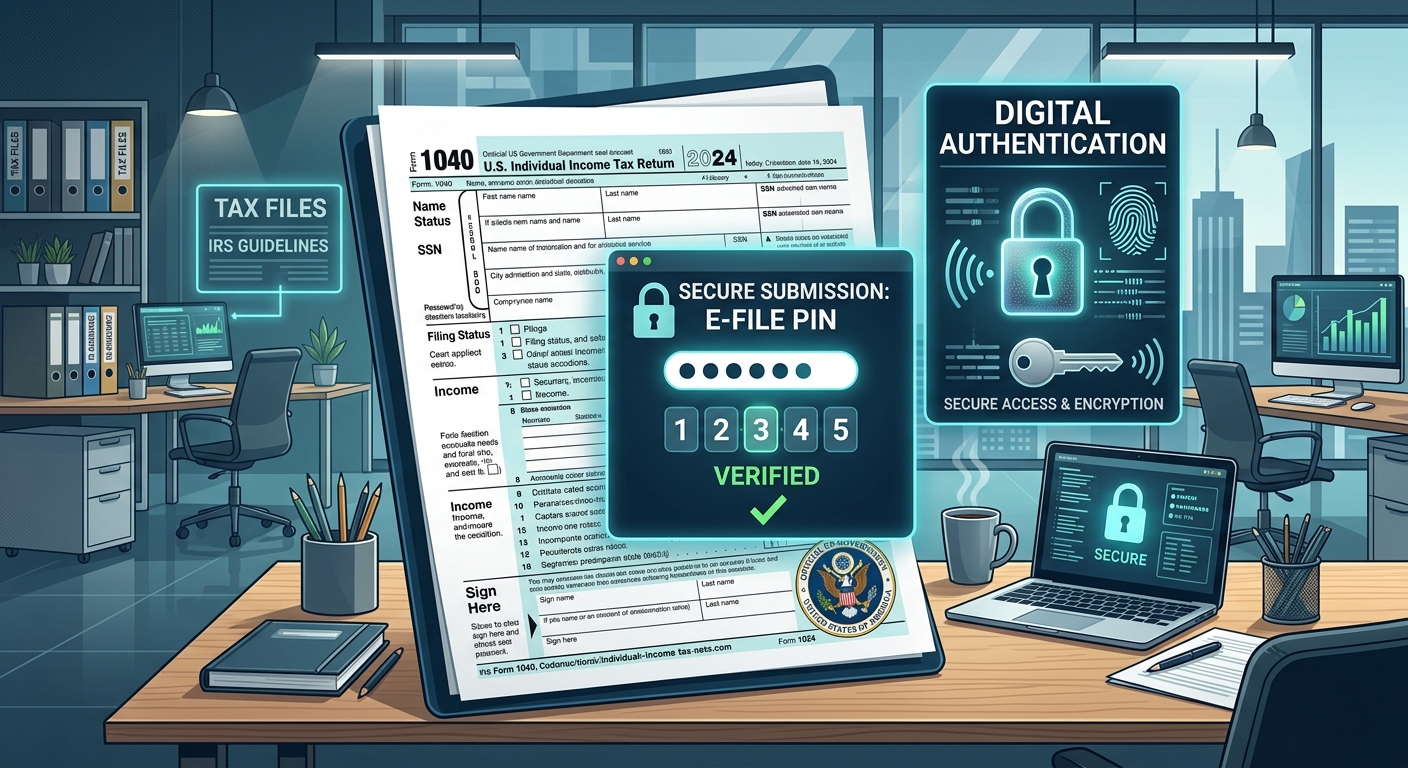
What Is an IRS Identity Protection PIN and Why Do You Need One?
You file your tax return in February. By March, the IRS sends you a letter saying your return was already filed under your Social Security number. Someone beat you to it, filed a fraudulent return in your name, and claimed your refund.
This is not a hypothetical scare tactic. In 2025 alone, the IRS flagged over 1.4 million fraudulent returns tied to stolen identities. The damage is not just financial. Victims spend an average of 6 months and 200+ hours resolving the mess with the IRS, often missing refunds, losing access to credits, and dealing with frozen accounts.
The good news? The IRS offers a free, simple tool to lock down your tax identity before criminals can exploit it. That tool is the IRS Identity Protection PIN, and if you are not using it yet, you are leaving your taxes vulnerable.
Quick Answer
An IRS Identity Protection PIN (IP PIN) is a six-digit code the IRS assigns to eligible taxpayers to prevent fraudulent tax returns from being filed using your Social Security number. You enter this PIN when filing your return, and the IRS will reject any return filed without it. It is free, renews annually, and available to anyone with an IRS online account.
How Getting My PIN From IRS Actually Works
Most taxpayers assume getting my PIN from IRS is complicated or requires proof of prior fraud. That is no longer true. As of 2026, the IRS has opened IP PIN enrollment to all taxpayers who can verify their identity online, regardless of whether they have been a fraud victim.
Step 1: Create or Access Your IRS Online Account
Go to IRS.gov and navigate to the “Get an IP PIN” tool. You will need to create an IRS online account if you do not already have one. This requires:
- Your Social Security number or ITIN
- Your filing status
- A valid email address
- A mobile phone in your name
- Your mailing address from your most recent tax return
- Account numbers from a credit card, mortgage, auto loan, or student loan
The IRS uses ID.me for identity verification, which takes about 10-15 minutes. You may be asked to upload a photo of your driver’s license or passport and complete a video selfie to confirm your identity.
Step 2: Retrieve Your IP PIN
Once logged in, select “Get an IP PIN” from your account dashboard. Your six-digit PIN will display immediately. The IRS also mails a CP01A notice to your address on file as a backup, but the online portal is the fastest way to access it.
Your IP PIN is valid for one calendar year and expires on December 31. You must retrieve a new one each year before filing your return. The IRS typically releases new PINs in mid-January.
Step 3: Use Your IP PIN When Filing
When you file your tax return (whether through a tax professional, software, or paper filing), enter your IP PIN exactly as provided. If you are filing a joint return, both spouses need their own IP PINs and must enter them separately.
If you forget to include your IP PIN or enter it incorrectly, the IRS will reject your return. You will then need to retrieve the correct PIN and refile.
Who Should Be Getting My PIN From IRS Right Now?
The IP PIN program was originally limited to confirmed identity theft victims. Now, it is open to all eligible taxpayers. That means you should enroll if you fit any of these profiles:
You Have a High-Income W-2 or 1099
Fraudsters target taxpayers with steady, reportable income because those returns are more likely to generate refunds. If you earn $75,000 or more annually and claim standard deductions or credits, your return is a prime target.
You Are Self-Employed or Own an S Corp
Business owners file Schedule C, which allows for significant deductions. Criminals file fake returns early in the season, claim inflated business losses, and request refunds before the IRS can verify income. If you file a Schedule C or have an LLC taxed as a sole proprietorship, get an IP PIN.
You Have Dependents or Claim EITC
Refundable credits like the Earned Income Tax Credit and Child Tax Credit make returns lucrative for fraudsters. If your return includes dependents or you qualify for refundable credits, your Social Security number is a high-value target.
You Have Been a Victim of Data Breaches
If your Social Security number was exposed in a breach (Equifax, healthcare provider, employer database, etc.), assume it is already circulating on the dark web. An IP PIN is your front-line defense against tax fraud stemming from that breach.
You Live in Florida, Georgia, or California
These states consistently rank in the top 5 for tax-related identity theft. California alone accounted for over 18% of all IRS fraud flags in 2025. If you live in a high-fraud state, enrolling in the IP PIN program is a smart, proactive step.
What Happens If You Do Not Use an IP PIN and Someone Files First?
Let’s say you skip the IP PIN. A fraudster obtains your Social Security number, files a return in February claiming a $6,000 refund, and directs it to a prepaid debit card. By the time you file your legitimate return in April, the IRS flags it as a duplicate.
Here is what happens next:
Your Return Gets Rejected
If you e-file, the system immediately rejects your return with an error code indicating a duplicate filing. If you paper-file, the IRS sends a notice weeks or months later.
You Enter IRS Identity Theft Resolution
You must complete IRS Form 14039 (Identity Theft Affidavit) and provide documentation proving your identity. This includes copies of prior-year returns, a government-issued ID, and proof of income (W-2s, 1099s, etc.).
Your Refund Is Frozen for 6 to 12 Months
The IRS does not release your refund until it verifies your identity and investigates the fraudulent return. During this period, you may face delays in accessing credits, stimulus payments, and advance Child Tax Credit payments.
You Lose Access to IRS Online Services
Once flagged for identity theft, your IRS online account may be temporarily locked. You will need to call the IRS Identity Protection Specialized Unit, where hold times regularly exceed 2 hours.
You May Owe Taxes You Already Paid
In some cases, the fraudulent return includes false withholding amounts, and the IRS later determines you owe taxes on income that was never withheld. You are then responsible for paying those taxes plus interest and penalties.
All of this is avoidable with a six-digit PIN.
Common Mistakes When Getting My PIN From IRS
Even taxpayers who enroll in the IP PIN program make costly errors. Here are the most common ones and how to avoid them.
Red Flag Alert: Not Retrieving Your PIN Before Filing
Your IP PIN expires every year. If you enrolled last year, you must retrieve your new PIN in January before filing your current-year return. If you file without it, the IRS will reject your return. Always log in to your IRS account and confirm your new PIN before submitting your return.
Red Flag Alert: Confusing Your IP PIN With Your AGI
Some taxpayers mistakenly enter their prior-year Adjusted Gross Income (AGI) in the IP PIN field when e-filing. These are two separate security measures. Your AGI is used to verify your identity when you first access tax software. Your IP PIN is entered later, in a dedicated field during the filing process. Double-check which field you are completing.
Red Flag Alert: Not Updating Your IP PIN With Your Tax Preparer
If you use a CPA or tax service, notify them that you have an IP PIN before they file your return. Many preparers are not aware their clients have enrolled, and they submit returns without the PIN, triggering an automatic rejection. Give your preparer your IP PIN in writing, and confirm they have entered it before filing.
Red Flag Alert: Losing Access to Your IRS Online Account
If you forget your IRS account login credentials, you cannot retrieve your IP PIN online. The IRS mails a CP01A notice with your PIN, but this can take 2-3 weeks. If you need your PIN immediately and cannot access your account, you must call the IRS e-Help Desk at 800-908-4490. Be prepared for long hold times.
KDA Case Study: Small Business Owner
Marcus, a 38-year-old e-commerce seller in Los Angeles, filed Schedule C for his Amazon FBA business. In 2024, someone filed a fraudulent return using his Social Security number, claiming $9,200 in fabricated business losses and requesting a refund. The IRS flagged the return, but Marcus did not discover the fraud until he tried to file his legitimate return in March.
He spent 7 months resolving the issue, including multiple calls to the IRS, submission of Form 14039, and verification of his income through bank statements and Amazon seller reports. His refund was delayed until October, costing him access to $4,800 he had planned to reinvest in inventory.
In 2025, Marcus enrolled in the IP PIN program through his IRS online account. The process took 12 minutes. When he filed his 2025 return, the IRS accepted it within 24 hours. His refund was issued in 18 days. By using the IP PIN, Marcus avoided a repeat of the previous year’s chaos and protected his business cash flow.
Ready to see how we can help you? Explore more success stories on our case studies page to discover proven strategies that have saved our clients thousands in taxes.
California-Specific Considerations for IRS Identity Protection PINs
California taxpayers face unique identity theft risks due to the state’s size, diversity of industries, and high volume of data breaches. If you are a California resident, here is what you need to know about getting my PIN from IRS.
California Ranks Second Nationally for Tax Identity Theft
According to IRS Criminal Investigation data, California accounted for 247,000 confirmed identity theft cases in 2025, second only to Florida. Los Angeles, San Diego, and the Bay Area are the highest-risk regions.
The Franchise Tax Board Does Not Issue IP PINs
The IP PIN program is federal only. It protects your IRS return but does not apply to your California state return filed with the Franchise Tax Board (FTB). The FTB uses separate fraud detection systems, including third-party income verification and address cross-checks. If your federal return is flagged for fraud, notify the FTB immediately by calling their Identity Theft Unit at 916-845-7088.
California Data Breach Notification Laws
California’s breach notification laws require businesses to inform consumers when their personal information is compromised. If you receive a breach notification letter from your employer, healthcare provider, or financial institution, enroll in the IP PIN program immediately. Do not wait for a fraudulent return to be filed.
EDD Fraud Spillover
California’s Employment Development Department (EDD) experienced massive fraud during the pandemic, with billions of dollars in fraudulent unemployment claims filed using stolen identities. Many of those stolen Social Security numbers are now being used to file fake tax returns. If you were affected by EDD fraud, get an IP PIN as soon as possible.
How to Use Your IP PIN If You File a Paper Return
Most taxpayers e-file, but if you still file a paper return, you must include your IP PIN in a specific location on Form 1040.
Where to Enter Your IP PIN on Form 1040
On the 2025 Form 1040, enter your six-digit IP PIN in the space provided directly to the right of the “Social Security Number” field at the top of the form. If you are filing jointly, your spouse’s IP PIN goes in the space next to their Social Security number.
Do not write your IP PIN anywhere else on the form. Do not attach a separate sheet with your IP PIN. The IRS will reject your return if the PIN is missing or entered incorrectly.
What If You Lose Your IP PIN After Printing Your Return?
If you printed your return and then lost your IP PIN, do not mail the return without it. Log in to your IRS online account and retrieve your PIN. If you cannot access your account, call the IRS e-Help Desk at 800-908-4490. Do not guess your PIN or leave the field blank.
Ready to Reduce Your Tax Bill?
KDA Inc. specializes in strategic tax planning for business owners, S Corps, LLCs, and high-net-worth individuals. Book a personalized consultation and walk away with a clear plan.
Frequently Asked Questions About Getting My PIN From IRS
Can I opt out of the IP PIN program once I enroll?
No. Once you enroll in the IP PIN program, you cannot opt out. The IRS requires you to use an IP PIN every year when filing your federal return. This is by design—opting out would defeat the purpose of the program, as it would create a window for fraudsters to file without the PIN.
What happens if I file my return without my IP PIN?
The IRS will reject your return, whether you e-file or paper-file. You will receive a rejection notice instructing you to retrieve your IP PIN and refile. This can delay your refund by 3 to 6 weeks. Always retrieve your PIN before filing.
Do I need an IP PIN if I am claimed as a dependent?
Yes. If you are eligible to enroll in the IP PIN program, you should do so even if you are claimed as a dependent on someone else’s return. Your IP PIN protects your individual Social Security number from being used to file fraudulent returns. Your parent or guardian does not need your IP PIN to claim you as a dependent.
Can I get an IP PIN if I have an ITIN instead of a Social Security number?
Yes. The IP PIN program is available to ITIN holders. Follow the same enrollment process through the IRS online account. If you cannot verify your identity online, call the IRS at 800-908-4490 to request an IP PIN by phone.
What if I move or change my address after enrolling?
Update your address with the IRS as soon as possible by filing Form 8822 (Change of Address). Your IP PIN is tied to your IRS account, not your mailing address, so you can still retrieve it online even if your address changes. However, if the IRS cannot verify your identity due to an address mismatch, you may be locked out of your account.
How Bookkeeping Protects You From Identity Theft Fallout
Most taxpayers think of identity theft as a one-time fix. File Form 14039, wait for the IRS to investigate, and move on. But if you run a business, identity theft has downstream consequences that proper bookkeeping can mitigate.
Fraudulent Returns Can Trigger Incorrect IRS Transcripts
When a fraudster files a return using your Social Security number, the IRS creates a tax account record under that return. Even after the fraud is resolved, your IRS transcript may show discrepancies in income, withholding, or estimated tax payments. Lenders, mortgage brokers, and the Social Security Administration rely on IRS transcripts to verify income. If your transcript shows incorrect data due to fraud, it can delay loan approvals or reduce your future Social Security benefits.
Proper bookkeeping ensures you have a clean, accurate record of your income and tax payments, which you can use to dispute transcript errors. Keep digital copies of all W-2s, 1099s, and payment receipts. If the IRS transcript does not match your records, file Form 4506-T to request a corrected transcript.
Business Owners Face EIN Theft, Not Just SSN Theft
If you operate an LLC, S Corp, or partnership, your Employer Identification Number (EIN) is also vulnerable. Fraudsters can use your EIN to file fake business returns, claim fraudulent employee retention credits, or open lines of credit. The IRS does not offer an IP PIN for EINs, so your best defense is meticulous bookkeeping and regular monitoring of your IRS Business Online Account.
Check your account quarterly to verify that no unauthorized returns have been filed under your EIN. If you discover fraudulent activity, file Form 14039-B (Business Identity Theft Affidavit) immediately.
If you need help setting up bookkeeping systems that protect your business from identity theft fallout, explore our bookkeeping and payroll services designed for small business owners and self-employed professionals.
What to Do If You Cannot Access Your IRS Online Account
The IP PIN system relies on online access, but not all taxpayers can verify their identity through ID.me. Here is what to do if you are locked out.
If You Do Not Have a Mobile Phone in Your Name
ID.me requires a mobile phone number tied to your name for two-factor authentication. If your phone is in someone else’s name (a spouse, parent, or employer), you cannot complete online verification. In this case, call the IRS e-Help Desk at 800-908-4490 and request an IP PIN over the phone. You will need to answer identity verification questions based on your tax history.
If You Cannot Provide a Credit Account Number
The IRS uses credit account verification as part of the online identity process. If you do not have a credit card, mortgage, auto loan, or student loan, you cannot verify your identity online. Call the IRS and request an IP PIN by phone. Be prepared to provide alternative documentation, such as a copy of your prior-year tax return.
If You Are a Victim of Domestic Violence or Stalking
Some taxpayers cannot safely access an IP PIN online because their abuser has access to their email, phone, or mailing address. If this applies to you, contact the IRS Taxpayer Advocate Service at 877-777-4778. They can issue your IP PIN through a secure channel and help you update your IRS records to protect your location.
Book Your Tax Identity Protection Strategy Session
You just spent 15 minutes reading this guide. Now spend 15 minutes protecting your tax identity. If you have not enrolled in the IP PIN program yet, do it today. If you have been a victim of identity theft and are still dealing with IRS delays, let us help you navigate the resolution process and set up systems to prevent it from happening again. Book a personalized consultation with our strategy team and get the clarity, compliance, and confidence you need. Click here to book your consultation now.
This information is current as of 5/11/2026. Tax laws change frequently. Verify updates with the IRS if reading this later.



