
Quick Answer
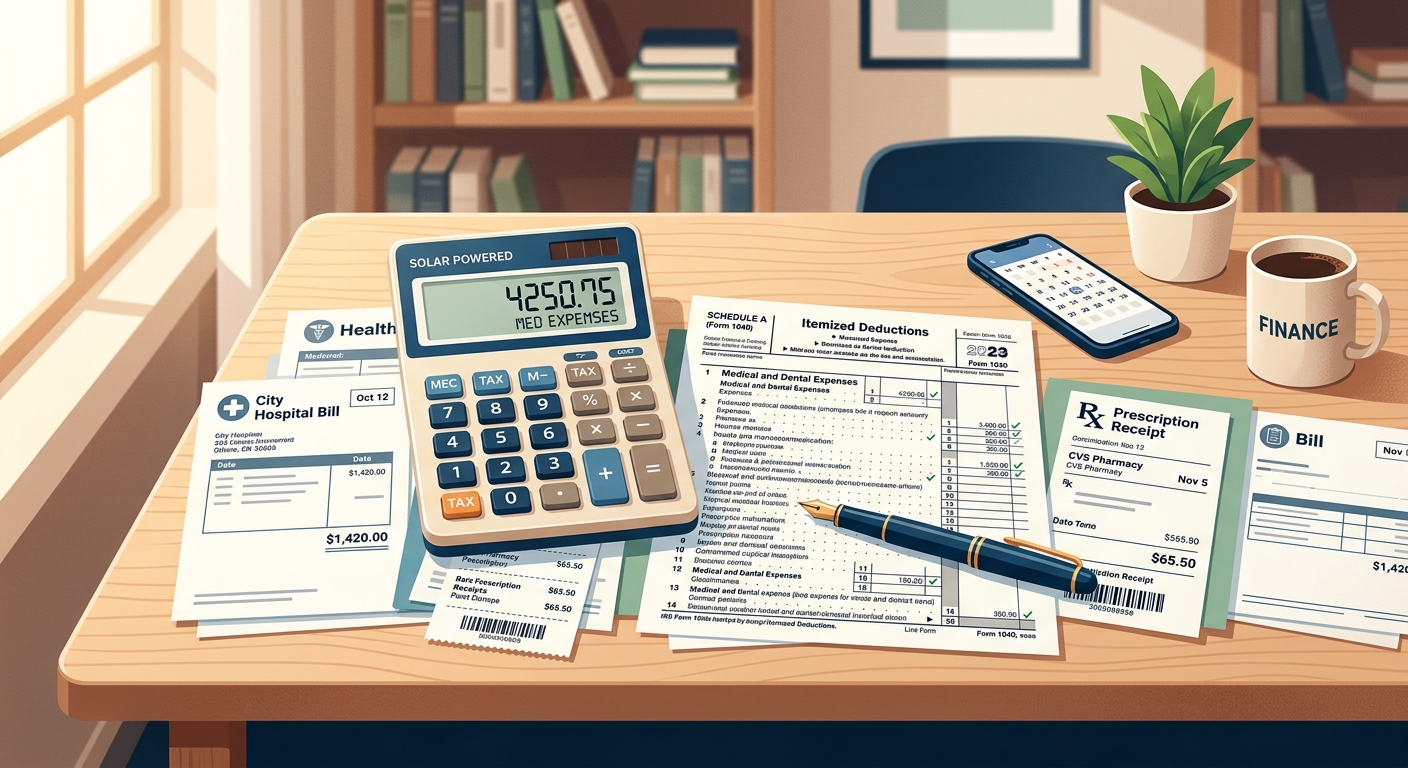
The maximum medical expenses tax deduction for 2026 allows you to deduct qualified medical expenses that exceed 7.5% of your adjusted gross income (AGI). There is no dollar cap on the deduction itself. If your AGI is $100,000 and you have $15,000 in medical expenses, you can deduct $7,500 ($15,000 minus the $7,500 threshold). This deduction is only available if you itemize on Schedule A.
What Most Taxpayers Miss About Medical Expense Deductions
Most people think medical expense deductions don’t apply to them. They assume the threshold is too high or that their costs aren’t significant enough. But here’s the reality: one hospitalization, chronic condition, or unexpected surgery can push you past the 7.5% AGI threshold fast.
The bigger issue? Taxpayers leave thousands on the table every year because they don’t know what qualifies. Prescription copays, yes. But also dental work, vision care, medical equipment, travel to medical appointments, and even certain home modifications. The IRS definition of “medical expense” is far broader than most CPAs even realize.
If you or a dependent had significant healthcare costs in 2026, this deduction could save you $2,000 to $10,000 depending on your income level and tax bracket. California taxpayers benefit at both the federal and state level since California conforms to the federal 7.5% threshold as of 2026.
Understanding the 7.5% AGI Threshold
The maximum medical expenses tax deduction begins after your qualified expenses exceed 7.5% of your adjusted gross income. This is the floor, not a cap. Once you cross that threshold, every dollar beyond it becomes deductible.
How the Threshold Works in Real Numbers
Let’s break this down with specific examples:
- $50,000 AGI: Your threshold is $3,750. Medical expenses beyond that amount are deductible.
- $80,000 AGI: Your threshold is $6,000. You deduct expenses above $6,000.
- $150,000 AGI: Your threshold is $11,250. Expenses above that qualify.
- $250,000 AGI: Your threshold is $18,750. Higher earners need substantial medical costs to benefit.
Most taxpayers assume the threshold is too high. But consider this: chemotherapy, surgery, dental implants, or long-term care for aging parents can easily generate $20,000 to $50,000 in annual expenses. For a household earning $100,000, the threshold is only $7,500. That means $12,500 to $42,500 becomes deductible.
California Conformity Matters
California follows the federal 7.5% threshold for 2026. That means if you qualify for the federal deduction, you also reduce your California state tax liability. With California’s top marginal rate reaching 13.3%, high-income taxpayers with major medical expenses can see combined federal and state savings exceeding $15,000.
According to IRS Publication 502, medical expenses include costs for diagnosis, treatment, mitigation, or prevention of disease. The definition is expansive, and that’s where the opportunity lies.
What Qualifies as a Deductible Medical Expense
The IRS allows deductions for a wide range of medical and dental expenses. Most taxpayers know about hospital bills and prescriptions. But the list goes much further.
Common Deductible Expenses
- Doctor and specialist visits, including copays and out-of-pocket costs
- Prescription medications and insulin (over-the-counter drugs do not qualify unless prescribed)
- Hospital and surgical fees, including anesthesia and facility charges
- Dental cleanings, fillings, crowns, bridges, dentures, extractions, and orthodontics
- Vision exams, prescription glasses, contact lenses, and LASIK surgery
- Chiropractic care, physical therapy, and occupational therapy
- Mental health counseling and psychiatric treatment
- Diagnostic tests, lab work, MRIs, X-rays, and blood tests
- Medical equipment such as wheelchairs, walkers, crutches, and glucose monitors
- Hearing aids and batteries
Overlooked Deductible Expenses
These are the expenses that separate strategic tax planning from generic filing:
- Travel for medical care: Mileage to and from appointments at $0.21 per mile for 2026, plus parking and tolls. If you drove 2,000 miles for medical care, that’s $420 deductible.
- Lodging for medical treatment: Up to $50 per night per person if you must travel more than 50 miles from home for care. Includes lodging for a companion if medically necessary.
- Home modifications: Ramps, railings, widened doorways, or stairlifts if medically necessary. You deduct the cost to the extent it does not increase the home’s value.
- Medical conferences: Registration and travel costs for conferences related to a chronic illness affecting you or a dependent.
- Long-term care insurance premiums: Age-based limits apply. For 2026, taxpayers age 61-70 can deduct up to $4,770 in premiums.
- Weight loss programs: Deductible if prescribed by a doctor for a specific disease such as obesity, hypertension, or diabetes. General wellness programs do not qualify.
- Smoking cessation programs: Including prescribed medications like nicotine patches.
- Special education: Tutoring or special schooling for children with learning disabilities diagnosed by a physician.
Pro Tip: Keep a mileage log for every medical appointment. Use a simple spreadsheet or mileage tracking app. Even routine visits add up fast. A family with regular pediatrician, dentist, and specialist appointments can easily log 1,500+ miles annually.
What Does Not Qualify
The IRS draws clear lines. These expenses are not deductible:
- Cosmetic surgery unless medically necessary (reconstructive surgery after an accident or mastectomy qualifies)
- Over-the-counter medications unless prescribed by a doctor
- Health club or gym memberships (even if recommended by a doctor)
- Vitamins and supplements for general health
- Teeth whitening
- Hair transplants
- Health insurance premiums if paid with pre-tax dollars through an employer plan
Red Flag Alert: Do not deduct reimbursed expenses. If your insurance covered the cost, you cannot claim it. Only out-of-pocket costs qualify. If you receive reimbursement after filing, you may need to report it as income in the following year.
KDA Case Study: High-Net-Worth Individual
David is a 58-year-old real estate investor in Orange County with an AGI of $180,000. In 2026, his wife underwent spinal surgery followed by months of physical therapy. Their daughter required orthodontic work and LASIK surgery. David also installed a wheelchair ramp at their home for his aging mother who moved in after a stroke.
Their total qualified medical expenses:
- Spinal surgery (out-of-pocket after insurance): $18,400
- Physical therapy (25 sessions at $150 copay): $3,750
- Orthodontics: $6,200
- LASIK: $4,800
- Wheelchair ramp: $5,500
- Prescription medications: $2,100
- Mileage for medical appointments (1,800 miles): $378
- Total: $41,128
David’s AGI threshold: $180,000 x 7.5% = $13,500
Deductible amount: $41,128 – $13,500 = $27,628
Tax savings at 24% federal bracket: $6,631
California tax savings at 9.3% bracket: $2,569
Total first-year tax savings: $9,200
KDA prepared David’s return with detailed documentation for every expense. We provided a medical expense tracking system for future years and identified additional deductible costs David had overlooked, including his mother’s Medicare Part B premiums which he paid on her behalf.
Ready to see how we can help you? Explore more success stories on our case studies page to discover proven strategies that have saved our clients thousands in taxes.
Insurance Premiums and the Medical Expense Deduction
Health insurance premiums can be deductible as medical expenses, but the rules depend on how you pay them and your employment status.
Who Can Deduct Health Insurance Premiums
Self-employed individuals: If you’re self-employed, you can deduct 100% of health insurance premiums for yourself, your spouse, and dependents as an above-the-line deduction on Schedule 1. This is better than the medical expense deduction because there’s no AGI threshold and it reduces your adjusted gross income directly.
W-2 employees paying post-tax premiums: If your employer does not offer health insurance or you buy supplemental coverage with after-tax dollars, those premiums count toward your medical expenses subject to the 7.5% floor.
Early retirees: If you’re under 65 and paying for your own health insurance before Medicare eligibility, those premiums are often your largest deductible medical expense. For a couple paying $1,800/month in premiums, that’s $21,600 annually.
What Counts as Health Insurance Premiums
- Medical and hospitalization insurance
- Qualified long-term care insurance (subject to age-based limits)
- Medicare Part B and Part D premiums
- Medicare Advantage premiums
- Medigap supplemental insurance
- COBRA premiums
- Dental and vision insurance premiums paid with after-tax dollars
Pro Tip: If you’re self-employed and paying your own health insurance, do not include those premiums in your itemized medical expenses. Take them as the self-employed health insurance deduction on Schedule 1 instead. It’s a more valuable deduction because it reduces your AGI and you don’t lose any benefit to the 7.5% threshold.
Timing Strategies to Maximize Your Deduction
Strategic taxpayers bunch medical expenses into a single tax year to exceed the 7.5% AGI threshold. If you know you’ll have significant expenses, timing matters.
Bunching Medical Expenses
Let’s say you need dental work, new glasses, and elective LASIK surgery. Your AGI is $90,000, so your threshold is $6,750. If you spread these expenses across two years, you might not exceed the threshold in either year. But if you schedule everything in one year, you could deduct thousands.
Example:
- Dental implants: $8,000
- LASIK for you and your spouse: $9,000
- New prescription glasses: $800
- Annual prescriptions and copays: $2,500
- Total: $20,300
Threshold: $6,750
Deductible: $13,550
Tax savings at 22% bracket: $2,981
If you spread these across two years, you might fall below the threshold both years and lose the entire deduction.
Year-End Planning Opportunities
If you’re close to the threshold in November or December, consider accelerating expenses before year-end:
- Schedule elective procedures before December 31
- Stock up on prescription medications (90-day supplies instead of 30-day)
- Pay outstanding medical bills before year-end even if not yet due
- Order prescription glasses or contacts
- Prepay next year’s long-term care insurance premium if the insurer allows it
Red Flag Alert: You can only deduct expenses in the year you pay them, not when services are rendered. If you charge medical expenses to a credit card in December 2026, they’re deductible in 2026 even if you don’t pay the credit card bill until 2027.
Documentation Requirements That Survive IRS Scrutiny
The IRS examines medical expense deductions closely. Claiming $30,000 in medical expenses without proper documentation invites an audit. Here’s how to protect yourself.
What You Must Keep
- Receipts: Itemized receipts for every expense. Credit card statements alone are not sufficient. You need documentation showing what you paid for.
- Explanation of Benefits (EOB) statements: These show what insurance paid versus what you paid out-of-pocket.
- Prescriptions: Pharmacy receipts or annual prescription summary from your pharmacy.
- Mileage logs: Date, destination, purpose, and miles driven for every medical trip.
- Physician letters: For expenses that might be questioned (weight loss programs, special education, home modifications), get a letter from your doctor stating the medical necessity.
- Canceled checks or bank statements: Proof of payment for services.
- Insurance premium statements: Annual summary from your insurer or monthly statements.
How to Organize Medical Expense Records
Create a dedicated folder (digital or physical) for medical expenses at the start of each year. Every time you incur a medical cost, add documentation immediately. Use categories:
- Doctor visits and specialists
- Hospital and surgery
- Prescriptions
- Dental
- Vision
- Medical equipment
- Insurance premiums
- Travel and mileage
- Miscellaneous
At year-end, total each category and prepare a summary spreadsheet. Your tax preparer will thank you, and you’ll have everything you need if the IRS asks questions.
Special Situations and Edge Cases
The maximum medical expenses tax deduction has nuances that matter for specific taxpayer situations.
Dependents’ Medical Expenses
You can deduct medical expenses you paid for your dependents. This includes children, parents, or other relatives you support. The dependent does not need to meet the income or support tests if you provided more than half their support and they meet the relationship test.
Example: You pay $15,000 in nursing home care for your mother who receives Social Security income. As long as you provide more than half her total support, you can deduct those medical expenses on your return even though she’s not your tax dependent.
Multiple Support Agreements
If you and your siblings share the cost of a parent’s medical care but no single person provides more than 50% support, you can use IRS Form 2120 to designate who claims the parent as a dependent. The designated person can then deduct all medical expenses paid by any sibling.
Divorced Parents and Medical Expenses
The parent who pays medical expenses for a child can deduct them, even if the other parent claims the child as a dependent. This applies when parents are divorced or legally separated and have a custody agreement.
Medical Expenses for Deceased Taxpayers
If you pay medical expenses for a deceased spouse or dependent within one year of death, you can claim them on your return for the year paid or amend the decedent’s final return.
California-Specific Considerations
California taxpayers benefit from state conformity to the federal medical expense deduction rules, but there are state-specific factors to understand.
California Follows Federal Rules
As of 2026, California conforms to the federal 7.5% AGI threshold for medical expense deductions. This was not always the case. Prior to recent conformity updates, California had different thresholds and limitations. Current law means if you qualify federally, you qualify for California purposes.
Medi-Cal and Covered California
If you receive Medi-Cal benefits or subsidized health insurance through Covered California, you cannot deduct expenses covered by those programs. Only your out-of-pocket costs after insurance qualify.
However, if you are ineligible for Medi-Cal or Covered California subsidies due to income, and you pay full premium costs for health insurance, those premiums are fully deductible subject to the 7.5% threshold.
California State Disability Insurance (SDI)
Premiums for California SDI are not deductible as medical expenses. These are treated as state income taxes, not health insurance.
How to Claim the Medical Expense Deduction
To claim the maximum medical expenses tax deduction, you must itemize deductions on Schedule A. This means your total itemized deductions must exceed the standard deduction.
Standard Deduction vs. Itemizing
For 2026, the standard deduction is:
- Single or Married Filing Separately: $16,550
- Married Filing Jointly: $33,100
- Head of Household: $24,850
You should itemize if your total deductions (medical expenses, state and local taxes, mortgage interest, charitable contributions) exceed the standard deduction.
Step-by-Step: How to File Schedule A
- Gather all medical expense records – Receipts, EOBs, mileage logs, insurance statements
- Calculate total qualified expenses – Add up all deductible costs paid during the tax year
- Determine your AGI threshold – Multiply your adjusted gross income by 7.5%
- Subtract the threshold from total expenses – Only the amount above the threshold is deductible
- Complete Schedule A, Line 1 – Enter the deductible amount
- Complete remaining Schedule A lines – Include other itemized deductions (SALT, mortgage interest, charity)
- Compare to standard deduction – If Schedule A total exceeds standard deduction, attach Schedule A to Form 1040
- Attach documentation – Keep detailed records with your tax files (do not mail to IRS unless requested)
Pro Tip: Use tax software or work with a CPA who understands medical expense deductions. Generic tax prep often misses deductible expenses or fails to maximize the benefit through proper timing and documentation.
For detailed IRS guidance on what qualifies, see IRS Publication 502: Medical and Dental Expenses.
Common Mistakes That Cost Taxpayers Thousands
Even experienced taxpayers make errors with medical expense deductions. Avoid these common pitfalls.
Mistake 1: Not Tracking Mileage
Medical mileage adds up faster than you think. If you or a family member has a chronic condition requiring regular appointments, you could drive 2,000+ miles annually. At $0.21 per mile, that’s over $400 in deductions most people ignore.
Mistake 2: Forgetting Alternative Treatments
Chiropractic care, acupuncture, and mental health counseling are fully deductible. Many taxpayers assume only traditional medical care qualifies. As long as the provider is licensed and the treatment is for a diagnosed condition, it counts.
Mistake 3: Overlooking Capital Improvements
If you install a ramp, widen doorways, or add grab bars for medical reasons, the cost is deductible to the extent it does not increase your home’s fair market value. Most home accessibility modifications do not increase value and are fully deductible. Get a contractor’s statement and physician’s letter documenting medical necessity.
Mistake 4: Deducting Expenses Paid by HSA or FSA
If you paid medical expenses with Health Savings Account (HSA) or Flexible Spending Account (FSA) funds, those expenses are not deductible. You already received the tax benefit when you contributed pre-tax dollars to those accounts. Only out-of-pocket expenses paid with after-tax dollars qualify.
Mistake 5: Claiming Cosmetic Procedures
Cosmetic surgery is not deductible unless it’s medically necessary. Rhinoplasty to correct a breathing disorder qualifies. Rhinoplasty for appearance does not. Reconstructive surgery after an accident, injury, or mastectomy qualifies.
Mistake 6: Not Bunching Expenses
If you’re close to the threshold but not quite there, consider accelerating discretionary medical expenses into the current year. Schedule dental work, buy new glasses, or stock up on prescriptions before December 31.
How Do Medical Expenses Impact Your Overall Tax Strategy?
Medical expense deductions interact with other parts of your tax return in ways that can either amplify or reduce their value.
Impact on AMT
The Alternative Minimum Tax (AMT) allows medical expenses as a deduction, but the threshold is the same: 7.5% of AGI. If you’re subject to AMT, you still get the deduction, but other itemized deductions (state and local taxes) may be disallowed, which can make medical expenses even more valuable.
Impact on Other Credits
Large medical expense deductions reduce your taxable income, which can increase eligibility for credits that phase out at higher income levels (Child Tax Credit, education credits, etc.). For taxpayers near phase-out thresholds, a large medical deduction can preserve thousands in credits.
Impact on State Taxes
California conforms to federal medical expense deduction rules, which means reducing your federal AGI also reduces your California taxable income. The combined federal and state benefit can be substantial, especially for high earners in California’s 9.3% to 13.3% tax brackets.
What Happens If You Miss the Deduction?
If you failed to claim medical expenses on a prior-year return, you can amend using Form 1040-X. You have three years from the original filing deadline to amend and claim a refund.
Example: You filed your 2023 return in April 2024 but forgot to itemize $18,000 in medical expenses. You have until April 2027 to file an amended return and claim the deduction. If you’re in the 24% federal bracket and 9.3% California bracket, you could recover over $6,000.
If you’re considering exploring tax planning strategies to maximize deductions like these, working with a knowledgeable CPA ensures you capture every dollar you’re entitled to.
Ready to Reduce Your Tax Bill?
KDA Inc. specializes in strategic tax planning for business owners, S Corps, LLCs, and high-net-worth individuals. Book a personalized consultation and walk away with a clear plan.
Frequently Asked Questions
Can I deduct medical expenses if I take the standard deduction?
No. The medical expense deduction is only available if you itemize deductions on Schedule A. If your total itemized deductions do not exceed the standard deduction, you will not benefit from claiming medical expenses.
Are health insurance premiums deductible if my employer pays them?
No. Employer-paid health insurance premiums are already excluded from your taxable income. You cannot deduct them again as a medical expense. Only premiums you pay with after-tax dollars are deductible.
Can I deduct medical expenses for my elderly parent who doesn’t live with me?
Yes, if you provide more than half of your parent’s total support. You can deduct medical expenses you paid for them even if they are not your dependent for tax purposes and even if they live independently or in a care facility.
Book Your Tax Strategy Session
If you’re unsure whether your medical expenses qualify or how to properly document them to maximize your deduction, let’s fix that. At KDA, we work with high-net-worth individuals, business owners, and families facing significant healthcare costs to ensure every deductible dollar is captured and defended. Book a personalized consultation with our strategy team and get clear, compliant, and confident. Click here to book your consultation now.
This information is current as of 5/26/2026. Tax laws change frequently. Verify updates with the IRS if reading this later.



