
Quick Answer
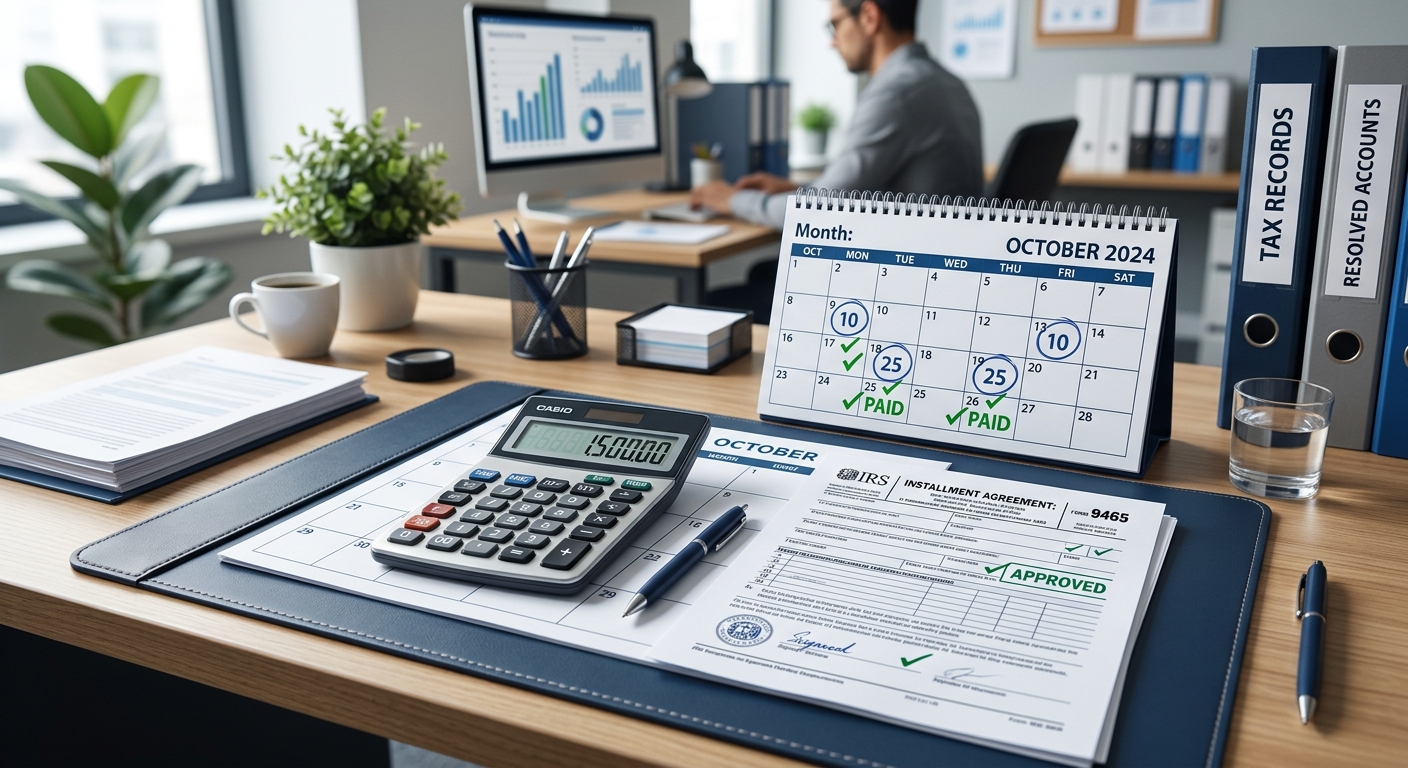
Yes, there are payment plans for taxes offered by the IRS. If you owe taxes but can’t pay the full balance by April 15, you can apply for an installment agreement online. The IRS offers short-term plans (up to 180 days) and long-term plans (up to 72 months) depending on how much you owe and your financial situation. Applying for a payment plan helps you avoid aggressive collection actions like liens and levies while you pay down your balance over time.
The Real Cost of Ignoring Tax Debt
Here’s what most taxpayers get wrong: they think not filing or not paying buys them time. It doesn’t. The moment you miss the April 15 deadline without filing or paying, the IRS penalty clock starts ticking. You’ll face a failure-to-file penalty of 5% per month (up to 25% of your unpaid taxes), plus a failure-to-pay penalty of 0.5% per month. Add interest compounded daily at the current federal rate plus 3%, and a $5,000 tax bill can balloon to over $6,500 within a year.
The IRS doesn’t wait around. If you owe $10,000 or more and ignore notices, expect a federal tax lien on your credit report within 6 to 12 months. Liens destroy your ability to refinance, get approved for business loans, or even lease commercial space. If you continue ignoring the debt, the IRS escalates to levies, which means they can seize your bank account, garnish your wages, or take other assets without a court order.
But there’s a better path. Payment plans exist precisely to keep taxpayers out of enforcement hell. The IRS would rather collect your debt in manageable monthly chunks than spend resources chasing you through liens and levies. If you owe taxes and can’t pay in full, setting up a payment plan immediately stops penalties from piling up and keeps your financial life intact.
How IRS Payment Plans Actually Work
The IRS offers two main types of installment agreements: short-term and long-term. Your eligibility depends on how much you owe and whether you can pay within a specific time frame.
Short-Term Payment Plans (Up to 180 Days)
If you owe less than $100,000 in combined tax, penalties, and interest, you can request a short-term payment plan. This gives you up to 180 days to pay your balance in full. There’s no setup fee for short-term plans, but interest and the failure-to-pay penalty continue to accrue until the balance is paid off. The IRS won’t file a lien or levy your assets while you’re in compliance with your short-term agreement, making this the cleanest option if you can pay quickly.
Short-term plans work best for taxpayers who are temporarily cash-strapped but expect a big receivable, bonus, or asset sale within six months. For example, a 1099 contractor who owes $8,000 in taxes but has $15,000 in invoices coming due over the next four months can request a short-term plan and avoid setup fees entirely.
Long-Term Payment Plans (Up to 72 Months)
If you owe $50,000 or less in combined tax, penalties, and interest, you qualify for a long-term installment agreement. You can spread payments over up to 72 months, though the IRS prefers you pay off the balance as quickly as possible. Setup fees vary: $31 if you agree to automatic monthly withdrawals from your bank account, or $130 if you pay by check, money order, or debit card. Low-income taxpayers may qualify for a fee waiver or reduction.
Long-term plans continue to accrue interest and penalties, but at a reduced rate compared to non-payment. The failure-to-pay penalty drops from 0.5% per month to 0.25% per month once you’re in an active installment agreement. This penalty reduction alone can save you thousands if you owe a substantial balance.
Partial Payment Installment Agreements (PPIA)
If you owe more than $50,000 or truly cannot afford to pay your full balance within 72 months, you may qualify for a Partial Payment Installment Agreement. This requires extensive financial disclosure, including Form 433-A (Collection Information Statement for Wage Earners and Self-Employed Individuals) or Form 433-F (Collection Information Statement). The IRS will analyze your income, expenses, and assets to determine what you can realistically pay each month. Approval isn’t guaranteed, and the IRS will review your financial situation every two years to see if your payment amount should increase.
PPIAs are typically reserved for taxpayers facing genuine financial hardship. For instance, a small business owner with $120,000 in tax debt but only $800 per month in disposable income after necessary living expenses might qualify for a $400 monthly PPIA instead of the $2,000 per month a standard plan would require.
Step-by-Step: How to Apply for an IRS Payment Plan
Applying for an IRS payment plan is straightforward if you follow the process correctly. Here’s exactly what to do.
Step 1: Verify Your Balance and Tax Year
Before applying, confirm how much you owe and for which tax years. Log into your IRS Individual Online Account at IRS.gov/account to view your current balance, payment history, and any prior agreements. If you haven’t created an online account, you’ll need to verify your identity using ID.me or a valid credit card, mortgage, or student loan account.
Step 2: Choose Your Payment Plan Type
Based on your balance, decide whether you need a short-term plan (under 180 days) or long-term plan (up to 72 months). If you owe less than $100,000, you can apply online without speaking to an IRS agent. If you owe more than $50,000, you may need to call the IRS directly or submit Form 9465 (Installment Agreement Request) by mail.
Step 3: Apply Online Through the IRS Payment Plan Tool
Navigate to the IRS Online Payment Agreement tool at IRS.gov/opa. You’ll need your Social Security number, filing status, and the exact amount you owe. The tool will calculate your minimum monthly payment based on your balance and the number of months you select. Most applicants receive instant approval without needing to contact the IRS by phone.
Step 4: Set Up Automatic Bank Withdrawals
To get the lowest setup fee ($31 instead of $130), choose Direct Debit Installment Agreement (DDIA). You’ll provide your bank routing and account numbers during the application. The IRS will withdraw your monthly payment on the date you select (typically between the 1st and 28th of each month). Setting up automatic payments also reduces your failure-to-pay penalty rate, saving you money over the life of the agreement.
Step 5: Receive Confirmation and Stay Compliant
Once approved, you’ll receive a confirmation letter outlining your payment amount, due date, and agreement terms. To stay in good standing, you must make all payments on time and file all future tax returns by their deadlines. Missing a payment or failing to file a return can void your agreement, putting you right back into IRS collections.
What If You Can’t Afford the Minimum Monthly Payment?
The IRS calculates minimum monthly payments by dividing your total balance by the number of months remaining on the collection statute (usually 72 months). But what if even that amount exceeds your budget?
You have three options. First, you can request a Partial Payment Installment Agreement (PPIA) if your financial situation is dire. This requires submitting detailed financial statements and proving you cannot afford the standard payment. Second, you can apply for Currently Not Collectible (CNC) status, which temporarily pauses IRS collection activity if you can prove you have no disposable income. Third, you can explore an Offer in Compromise (OIC), which allows you to settle your debt for less than the full amount owed if you meet strict eligibility criteria.
Currently Not Collectible status doesn’t erase your debt. Interest and penalties continue to accrue, and the IRS can file a lien. But it stops levies and wage garnishments while you get back on your feet. If your financial situation improves, the IRS will remove CNC status and expect you to resume payments.
An Offer in Compromise is the most aggressive debt resolution strategy. The IRS accepts less than 40% of OIC applications, and approval depends on your ability to pay, income, expenses, and asset equity. A successful OIC might reduce a $40,000 tax debt to $8,000 if you can prove paying the full balance would create severe financial hardship. However, submitting an OIC requires a $205 application fee and extensive documentation, including bank statements, pay stubs, and asset valuations.
KDA Case Study: Small Business Owner
Marcus runs a landscaping LLC in Sacramento and owed $18,500 in taxes after a profitable 2025 season. He hadn’t set aside enough for quarterly estimated payments and couldn’t pay the full balance by April 15, 2026. Instead of ignoring the debt, Marcus applied for a long-term IRS payment plan through the online portal.
KDA helped Marcus structure a 48-month Direct Debit Installment Agreement with monthly payments of $425. By setting up automatic withdrawals, his setup fee was only $31 instead of $130. We also filed his 2026 return on time and ensured he increased his quarterly estimated payments to avoid the same issue next year. Over the 48-month period, Marcus will pay approximately $2,100 in interest and penalties, but he avoided a lien, levy, and credit damage. His total cost: $20,600 paid over four years instead of $18,500 due immediately.
Marcus paid KDA $1,800 for tax planning, filing, and installment agreement setup. His first-year savings came from avoiding a potential $5,000 bank levy and the credit score damage that would have cost him a denied business loan. ROI: avoiding financial catastrophe and staying in business.
Ready to see how we can help you? Explore more success stories on our case studies page to discover proven strategies that have saved our clients thousands in taxes.
Red Flags That Will Get Your Payment Plan Rejected
The IRS rejects payment plan applications for specific reasons. Avoid these mistakes to ensure approval.
Red Flag Alert: Unfiled Tax Returns
The IRS will not approve a payment plan if you have unfiled returns. Before applying, file all missing returns, even if you can’t pay the balance. The IRS needs a complete picture of your tax liability before agreeing to installment terms. If you owe for 2023, 2024, and 2025 but only filed for 2025, your application will be denied until you file the earlier years.
Red Flag Alert: Requesting an Unrealistically Low Payment
If you owe $30,000 and request a $50 monthly payment, the IRS will reject your application. Your proposed payment must be enough to pay off the balance within 72 months. The IRS expects you to pay at least the minimum required amount unless you qualify for a Partial Payment Installment Agreement or Currently Not Collectible status.
Red Flag Alert: Missing Payments on a Prior Agreement
If you previously had an installment agreement and defaulted, the IRS will scrutinize your new application. You may be required to reinstate the old agreement or pay a reinstatement fee before qualifying for a new plan. Defaulting on two agreements within a three-year period makes it nearly impossible to get approved again without significant financial hardship documentation.
Pro Tip: Apply Before the IRS Files a Lien
Once the IRS files a Notice of Federal Tax Lien, removing it becomes much harder even if you enter a payment plan. Apply for your installment agreement as soon as you realize you can’t pay in full. Early action prevents liens and keeps your credit intact.
What Happens If You Miss a Payment?
Missing a single payment doesn’t automatically void your installment agreement, but the IRS will send you a notice reminding you to catch up. If you miss two consecutive payments or fall 60 days behind, the IRS can terminate your agreement and resume collection activity, including levies and garnishments.
If you anticipate missing a payment due to job loss, medical emergency, or business downturn, contact the IRS immediately. You may be able to modify your payment plan by submitting a new financial statement or requesting a temporary payment reduction. Ignoring the problem guarantees default.
Special Situations: When Standard Payment Plans Don’t Work
You Owe More Than $50,000
If your combined tax, penalty, and interest exceeds $50,000, you cannot apply online for a long-term payment plan. Instead, you’ll need to call the IRS at 1-800-829-1040 or submit Form 9465 by mail along with Form 433-F (Collection Information Statement). The IRS will review your finances and determine whether you qualify for a standard installment agreement or need a Partial Payment Installment Agreement.
You’re Self-Employed or Own a Business
Self-employed taxpayers and business owners can still apply for payment plans, but the IRS may require additional documentation, including profit-and-loss statements and bank account records. If you owe both individual income tax and business payroll taxes, the IRS may require separate agreements or lump both balances into a single plan depending on your circumstances.
You’re Facing Levy or Garnishment
If the IRS has already issued a levy or begun garnishing your wages, setting up a payment plan can stop the collection action. Contact the IRS immediately and apply for an installment agreement. Once approved, the IRS will release the levy, though it may take several weeks for your employer or bank to process the release.
You Live Outside the United States
U.S. citizens and residents living abroad still owe U.S. taxes and can apply for IRS payment plans. However, international wire transfers and foreign bank accounts complicate automatic withdrawals. You may need to make manual payments through IRS Direct Pay or international payment processors. The IRS may also grant you additional time to file and pay if you qualify under the foreign earned income exclusion or automatic extension rules.
California-Specific Considerations
California taxpayers face a dual challenge: federal tax debt and potential state tax debt with the Franchise Tax Board (FTB). While the IRS and FTB are separate agencies, both offer installment agreements with similar structures.
If you owe California state taxes, you can apply for an FTB payment plan through the MyFTB online portal. California’s installment agreement rules mirror federal rules in many ways: short-term plans for balances under $25,000, long-term plans for balances under $25,000, and manual review for balances above that threshold. Setup fees are lower ($34 for online applications), but California’s interest rate is often higher than the federal rate.
One critical difference: California is far more aggressive with tax liens. The FTB can file a state tax lien within 90 days of a missed payment, and removing it requires paying the balance in full or negotiating a lien subordination. If you owe both federal and state taxes, prioritize setting up payment plans for both simultaneously to avoid double enforcement actions.
How Payment Plans Affect Your Credit and Future Borrowing
An IRS payment plan itself does not appear on your credit report. However, a federal tax lien does, and liens can tank your credit score by 100 points or more. If you set up a payment plan before the IRS files a lien, your credit remains untouched.
Mortgage lenders and business loan underwriters will still discover your IRS debt during the application process. Most lenders require proof of an active payment plan and at least three consecutive on-time payments before approving a loan. If you’re in the middle of buying a house or applying for a business line of credit, notify your lender about your IRS payment plan early. Hiding it will result in automatic denial once the lender pulls your tax transcripts.
Alternatives to IRS Payment Plans
Payment plans aren’t the only option for resolving tax debt. Depending on your financial situation, these alternatives might be better.
Offer in Compromise
An Offer in Compromise allows you to settle your tax debt for less than the full amount owed. The IRS accepts an OIC if collecting the full balance would create economic hardship or if there’s doubt about whether you actually owe the full amount. Approval rates are low (around 33%), and you’ll need to prove you’ve exhausted all other payment options. Successful OICs can reduce a $50,000 debt to $10,000, but the application process takes 6 to 12 months and requires detailed financial disclosures.
Currently Not Collectible Status
If your monthly income barely covers rent, utilities, and food, the IRS may grant Currently Not Collectible status. This pauses collection activity, but interest and penalties continue to accrue. CNC status is temporary and reviewed annually. If your income increases, the IRS will resume collections. This option works for taxpayers facing unemployment, medical crises, or severe business downturns.
Penalty Abatement
If this is your first time owing taxes or you have a reasonable cause for non-payment (serious illness, natural disaster, death in the family), you can request First-Time Penalty Abatement. This removes the failure-to-pay and failure-to-file penalties, though interest remains. Penalty abatement can cut your total debt by 25% or more if you owe significant penalties. Apply by calling the IRS or submitting Form 843 (Claim for Refund and Request for Abatement).
Ready to Reduce Your Tax Bill?
KDA Inc. specializes in strategic tax planning for business owners, S Corps, LLCs, and high-net-worth individuals. Book a personalized consultation and walk away with a clear plan.
Frequently Asked Questions About IRS Payment Plans
Can I Apply for a Payment Plan If I Haven’t Filed My Return Yet?
No. The IRS requires you to file all outstanding tax returns before approving a payment plan. If you owe for multiple years, file all missing returns first, then apply for an installment agreement covering the total balance.
Will the IRS Negotiate My Payment Amount?
Not directly. The IRS calculates your minimum monthly payment based on your balance and the collection statute. However, if you qualify for a Partial Payment Installment Agreement or Currently Not Collectible status due to financial hardship, the IRS may accept a lower monthly payment or temporarily pause collections.
Can I Pay Off My Balance Early Without Penalty?
Yes. You can pay extra toward your balance or pay it off entirely at any time without early payment penalties. Paying early reduces the total interest and penalties you’ll owe over the life of the agreement.
What If My Financial Situation Changes?
If you lose your job, face a medical emergency, or experience a significant income drop, contact the IRS to modify your payment plan. You may need to submit updated financial statements, but the IRS can reduce your monthly payment or temporarily suspend collections if you demonstrate hardship.
Do I Still Need to Make Estimated Quarterly Payments?
Yes. If you’re self-employed or have other income not subject to withholding, you must continue making quarterly estimated payments for the current tax year while paying down prior-year balances. Failing to make estimated payments can void your installment agreement and trigger additional penalties.
Book Your Tax Strategy Session
If you’re staring at a tax bill you can’t pay and you’re not sure whether a short-term plan, long-term agreement, or alternative resolution is best, let’s fix that. Our team specializes in IRS payment plan setup, penalty abatement strategies, and comprehensive tax debt resolution. We’ll analyze your balance, financial situation, and options, then build a plan that keeps you compliant and out of collections. Click here to book your consultation now.
This information is current as of 4/10/2026. Tax laws change frequently. Verify updates with the IRS if reading this later.



