
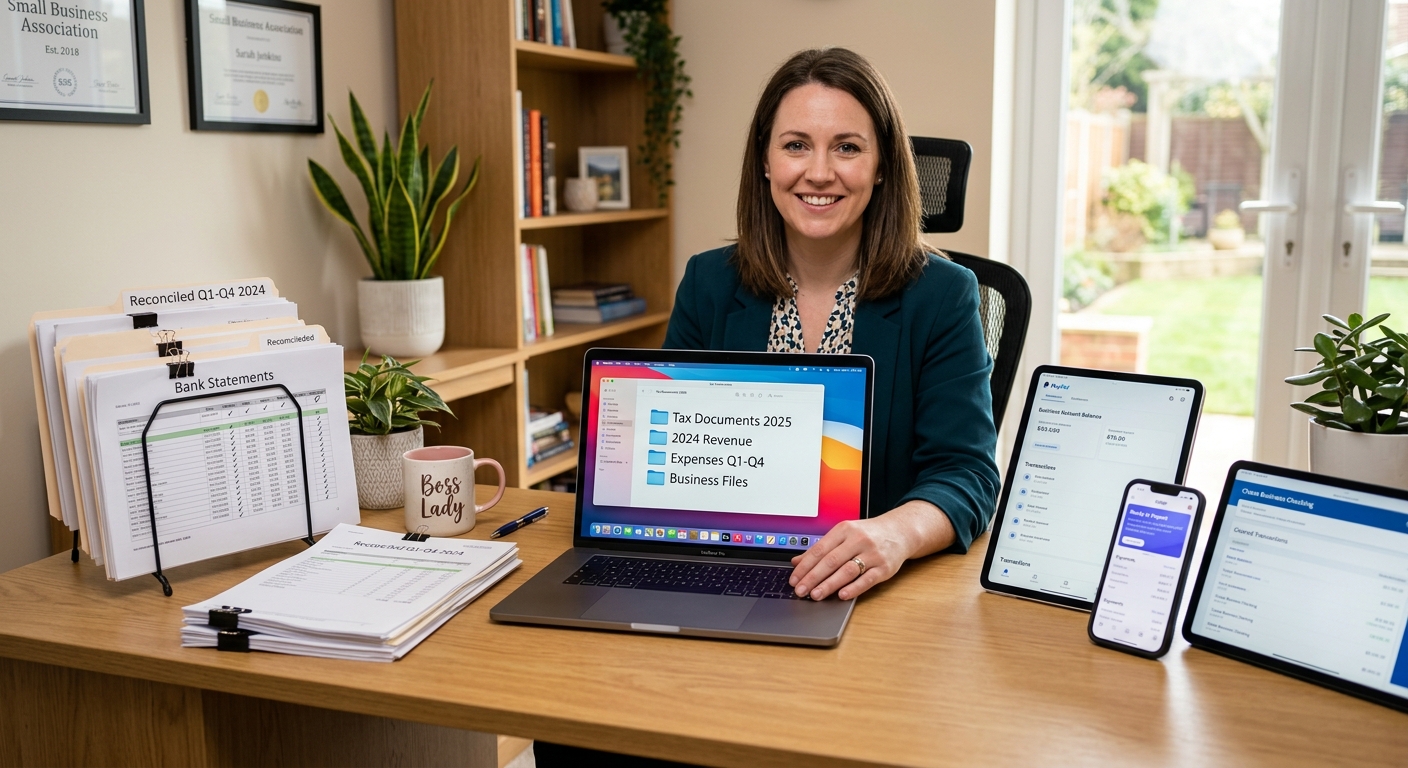
Most business owners operate under the illusion that tax season must be a time of chaos, late nights, and anxiety—a fear so common, it’s become part of the entrepreneurial mythos. But in reality, tax stress is a choice, not a fate. For the 2025 tax year, the small business owner who installs key systems early can slash not only their IRS bill but also their blood pressure. The secret weapon? The right mix of digital organization, monthly habits, and last-minute moves that save real money, not just sanity.
Quick Answer: Any business owner can eliminate most tax season panic by systematically reconciling accounts each month, adopting a tiered digital folder system for documents, tracking deductible purchases before the year closes, and reviewing estimated taxes while there’s still time to adjust.
The Myth of the Inevitable Tax Season Meltdown
Let’s confront the myth first: Only bad bookkeepers and delinquent filers scramble. Wrong. Even organized founders go to pieces if their business accounts, receipts, or 1099s are in buckets labeled “Sort Later.” The IRS expects small business financials—bank accounts, credit cards, PayPal, Venmo, Stripe—to all reconcile to the penny. Miss this and you invite late fees, missed deductions, or—worst of all—an audit.
In fact, over 21% of small businesses faced penalties linked to poor records or late filings last year. That’s not a paperwork problem, it’s a profit problem. If you’re still searching email for “1099” come January, you’re already costing yourself money.
Strategy 1: Close Your Books Early—Every Account, Every Month
The foundation is dead simple but universally skipped: reconcile every business account monthly. That’s not just your bank—it’s credit cards, PayPal, Stripe, and newer payment streams like Venmo or Square. If you accept a $200 freelance deposit via Stripe, does your P&L show that income, or is it hiding in “undeposited funds” hell?
This isn’t just about crossing t’s for the sake of compliance. For example, Emma, a graphic designer in Los Angeles, reconciles her four business accounts by the 5th of each month. By year-end, she’s already caught two miscategorized $1,250 payments—one flagged before her CPA would have missed it, saving her $510 in missed deductions and $76 in IRS underreporting penalties. Month-end vigilance is the #1 buffer between you and tax drama.
Not sure how to start? Sync your platforms using cloud-based accounting tools, then set a recurring 30-minute calendar block during the first week of every month. Those who skip this nearly always overpay—sometimes by $2,000 or more in unclaimed write-offs.
What If I Miss a Month?
Don’t panic. Go back and reconcile prior statements in order, using your accounting system to catch up. If bank reconciliations or merchant data are missing, ask your provider for historical CSV exports.
Strategy 2: Demand Proof—Every Deposit is Matched to an Invoice
This is where many entrepreneurs fall down. The IRS expects that every deposit aligns with a business invoice or supporting document. In practice, if your bank shows a $3,000 deposit, but there’s no matching invoice, that income will be questioned if you’re ever audited—or, even worse, classified as “miscellaneous income” at a higher effective tax rate.
Practical Example: Marcus runs a consulting agency. He invoices clients via QuickBooks but deposits via Zelle and Stripe. Without consistently matching invoices to deposits, he missed categorizing $8,500 in late Q3 income last year, leaving $2,000 undeducted and his books flagged for a potential audit.
- Match each deposit to its source invoice in your accounting platform
- If you receive aggregate payments (mixed client deposits), create a summary record with supporting documents
- Review weekly—never wait until January
How Does the IRS Catch This?
They compare your submitted gross receipts to what’s reported by 1099-K, 1099-NEC, and 1099-MISC forms sent from payment processors and clients. If there’s a mismatch, you get a letter—sometimes, an audit trigger.
Strategy 3: The Digital Tax Folder System—Your Stress-Reducing Vault
Stop imagining shoeboxes or random Google Drive dumps. The digital tax folder system is layered by year, then by document type:
- 2025 Tax
- Income Statements (P&L, 1099s)
- Expense Receipts (categorized)
- Payroll Records & Forms (W-2s, W-9s)
- Mileage Logs
- Bank and Credit Statements
This structure slashes prep time and keeps your CPA happy and efficient. When Sara, a self-employed therapist, moved to a digital folder system last fall, she cut her tax prep hours from 16 to 3 and avoided a $900 bill from her accountant for disorganized documents.
Back up your folders weekly using cloud storage you control—Dropbox, Google Drive—or invest in a secure document management app with client-sharing capabilities.
What If I’m Not Tech Savvy?
Simple template folders are available for free online. Most CPAs will review your structure if you ask, or explore affordable subscription-based tax document portals designed for small business.
Strategy 4: Review Your Estimated Taxes—Catch Underpayment Before It Hurts
Don’t let estimated tax be an annual guessing game. For 2025, review quarterly payments side-by-side with your business’s year-to-date profit and loss.
Example: David’s e-commerce store made $125,000 in profit by Q3 but paid only $15,000 in estimated taxes. By reviewing his P&L and adjusting before Q4, he avoided an underpayment penalty of nearly $2,100 after discovering $8,500 in deductible inventory costs he nearly overlooked.
- Compare your actual business performance to last year, not just last quarter
- Adjust your remaining quarterly estimates with Form 1040-ES (IRS guidance)
- Document all major changes—new contracts, investments, or deductions
Penalties for underpayment can add up—sometimes as much as 5% of what you owe. Conservative planning now prevents end-of-year sticker shock.
Do I Need to Pay Estimated Taxes?
If you’re a sole proprietor, S Corp owner, or partner with substantial income beyond W-2 wages, the answer is almost always yes. The IRS expects timely quarterly payments on profit as you earn it throughout the year.
Strategy 5: Make Smart Year-End Tax Moves—Act Before December 31
This is the difference between proactive and reactive filers. In the final weeks of the year, target deductible purchases—equipment, technology, or even advance payments for professional services. Explore available business tax credits, from the Work Opportunity Credit to the new 2025 green energy incentives. Evaluate if your business structure (LLC, S Corp, partnership) delivers the best tax advantage—entity changes effective before December 31 can impact your tax bill for the entire year.
Real Savings: A sole proprietor who invests $6,000 in new computers before year-end not only upgrades productivity but also secures an immediate deduction under Section 179, cutting up to $1,260 from their federal tax liability in the 22% bracket. A late S Corp election can save a consultant $4,800 in self-employment tax the following year.
- Document all purchases—store receipts in your digital tax folder
- Confirm qualification for credits with your tax advisor
- Assess S Corp election feasibility by mid-December for current year eligibility
What’s the Simplest Way to Review Deductible Purchases?
Run an expense report from your accounting software for all transactions in Q4, filter by category, and flag potential Section 179 or bonus depreciation candidates (IRS guide).
Why Most Business Owners Still Get Tax Prep Wrong
🔴 Red Flag Alert: The mistake isn’t ignorance—it’s neglect. Most founders know about write-offs but wait until the last minute, bank on memory, or dump receipts in a pile for a CPA to chase. This invites missed deductions, stress, and higher fees. The IRS isn’t impressed by panic; it rewards systematic, well-documented records. For 2025, documented diligence beats performative hustle—every time.
💡 Pro Tip: Set a recurring calendar reminder every quarter: Update your digital tax folder, reconcile accounts, and flag all missing documents before they snowball into problems.
Ready to Reduce Your Tax Bill?
KDA Inc. specializes in strategic tax planning for business owners, S Corps, LLCs, and high-net-worth individuals. Book a personalized consultation and walk away with a clear plan.
Fast FAQs: Your Next Tax Prep Moves
What If I Miss a Major Receipt or Document?
Ask vendors, clients, or banks for duplicates. Most digital payments and cloud software allow historical reports for up to seven years.
How Long Should I Keep Tax Documents?
The IRS requires you to keep business tax records for at least three years—but best practice is 7 years, especially for business asset purchases.
Can I Deduct Expenses Paid by Personal Credit Card?
Yes, as long as you document the expense’s business nature and track it in your records.
Your Year-End Tax Checklist for 2025
- Reconcile all business accounts through Dec 31
- Match every revenue deposit to a supporting document
- Update and back up your digital tax folder system
- Review quarterly estimated tax payments
- Make deductible year-end purchases and assess tax credits
- Evaluate if your current business structure is optimal
This information is current as of 3/31/2026. Tax laws change frequently. Verify updates with the IRS or FTB if reading this later.
Book Your End-of-Year Tax Strategy Session
If you’re serious about keeping more of your earnings—and steering clear of IRS headaches—now’s the time for an expert review. Our team will analyze your unique situation, pinpoint missed savings opportunities, and install systems that put tax season on autopilot. Click here to book your consultation now.
The IRS isn’t hiding these write-offs—you just weren’t taught how to find them.
Top 3 Takeaways:
1. Early, monthly bookkeeping and digital organization stops tax panic before it starts.
2. Matching every deposit to supporting documents is non-negotiable for audit-proof records.
3. Real savings come from year-end moves—don’t wait until January to act.
For more ways to organize your small business for tax savings, see our Tax Planning page or check out our Entity Structuring service for optimal business setups.



