
Quick Answer
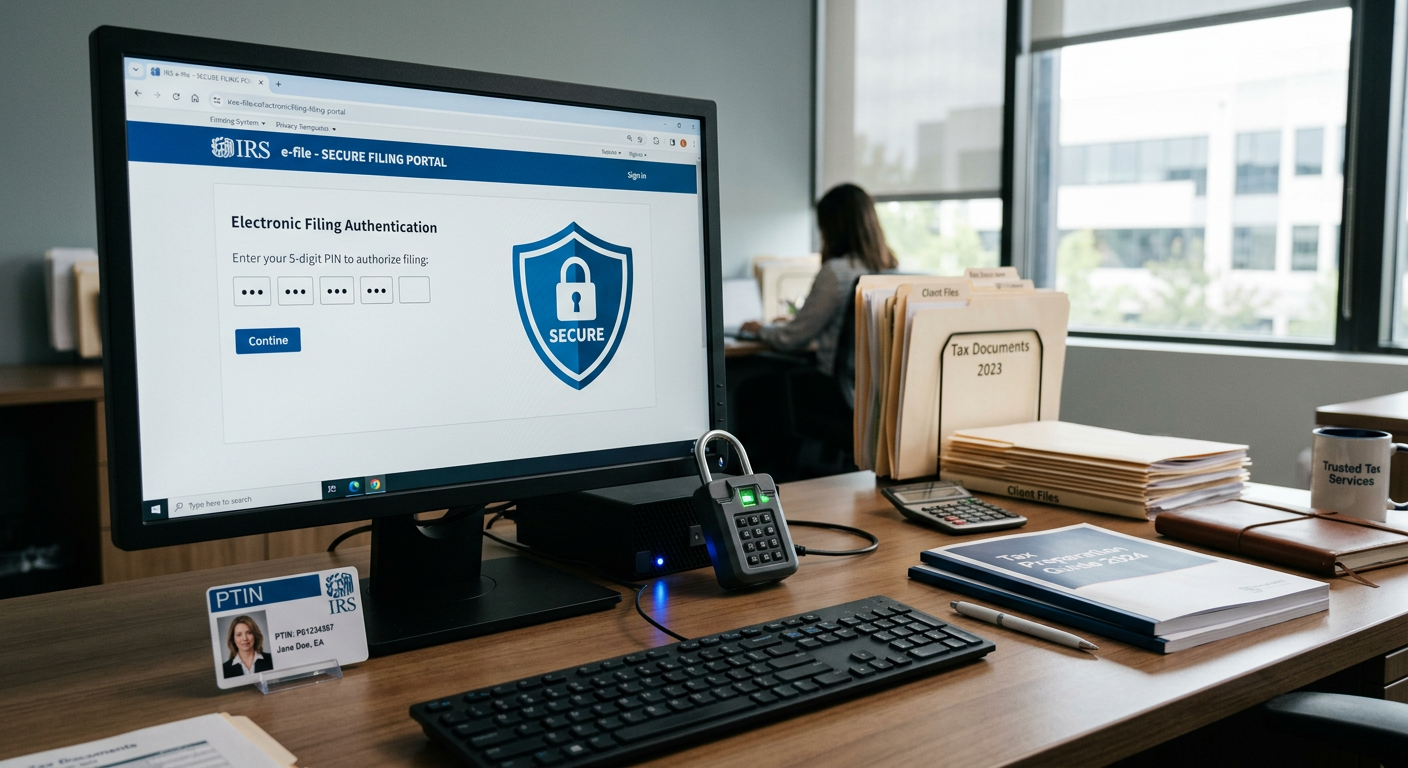
An IRS tax preparer PIN number is a six-digit Personal Identification Number required by the IRS for authorized tax professionals to electronically file returns on behalf of clients. As of 2026, all tax preparers with a valid PTIN (Preparer Tax Identification Number) must use this PIN to authenticate their identity and maintain security compliance when submitting electronic returns. The PIN must be renewed annually and serves as a critical fraud prevention measure to protect both preparers and taxpayers.
What Is the IRS Tax Preparer PIN Number?
The IRS tax preparer PIN number is a mandatory security credential that functions as an electronic signature for paid tax professionals. Think of it like a unique password that proves you are who you say you are when filing taxes for clients. This PIN works in tandem with your PTIN to create a two-factor authentication system that prevents unauthorized individuals from filing fraudulent returns under your credentials.
The IRS introduced enhanced PIN requirements in 2026 to combat a surge in identity theft refund fraud. According to recent IRS enforcement data, fraudulent filings using stolen preparer credentials resulted in over $4.2 billion in attempted false refunds in 2025 alone. The new PIN system adds a critical layer of protection by requiring annual authentication that only the legitimate preparer can obtain.
Here’s how the system works in practice: When you complete a client’s tax return using professional software, the system prompts you to enter both your PTIN and your current tax preparer PIN. The IRS validates both credentials in real-time before accepting the electronic submission. Without a valid PIN, your e-file submission will be rejected, forcing you to either obtain the PIN or file paper returns, which creates significant delays for your clients.
Who Needs an IRS Tax Preparer PIN?
Not every person who touches a tax return needs a preparer PIN. The IRS requires this credential specifically for paid tax return preparers who file returns electronically. Let’s break down who falls into this category and who doesn’t.
Professionals Who Must Have a Tax Preparer PIN
- Certified Public Accountants (CPAs) who prepare returns for compensation
- Enrolled Agents (EAs) working in tax preparation practices
- Tax attorneys who file returns as part of their legal services
- Annual Filing Season Program participants preparing returns for fees
- Unenrolled preparers with valid PTINs who charge for tax preparation services
- Firms and practices where multiple preparers file under the business EFIN (Electronic Filing Identification Number)
Who Doesn’t Need a Tax Preparer PIN
Individual taxpayers filing their own returns through TurboTax, H&R Block software, or other consumer platforms do not need a tax preparer PIN. This credential is exclusively for professionals who prepare returns for others as a paid service. Additionally, IRS volunteers who prepare returns through programs like VITA (Volunteer Income Tax Assistance) or TCE (Tax Counseling for the Elderly) use different authentication systems and don’t require the standard preparer PIN.
Here’s a real-world scenario: Marcus is a CPA in Sacramento who prepares 340 tax returns annually for small business clients. He charges an average of $850 per return and files everything electronically. Marcus must obtain and maintain a current tax preparer PIN each year. Without it, he cannot file any of his clients’ returns electronically, which would delay refunds by 8-12 weeks and likely cause him to lose clients to competitors who can file faster.
How the IRS Tax Preparer PIN System Works in 2026
The 2026 filing season brought significant changes to how tax preparers obtain and use their PINs. Understanding the updated process helps you avoid filing disruptions and maintain compliance with new IRS security protocols.
The Annual PIN Renewal Requirement
Your tax preparer PIN expires every December 31, meaning you must obtain a new PIN for each tax season. The IRS typically opens the PIN application portal in mid-December for the following year. For the 2026 filing season, the IRS began accepting PIN applications on December 15, 2025.
The renewal process requires you to authenticate your identity through the IRS secure access system. You’ll need your PTIN, Social Security number, date of birth, and verification of prior-year AGI or your IRS account PIN from the previous year. The system uses these data points to confirm you are the legitimate credential holder.
Step-by-Step: Obtaining Your Tax Preparer PIN
- Access the IRS PTIN Portal – Navigate to irs.gov/ptin and log into your existing account. If this is your first year, you’ll need to create an account using the “New User” registration path. Budget 20-30 minutes for first-time setup.
- Complete Identity Verification – The IRS uses knowledge-based authentication questions pulled from your credit history and public records. You’ll answer 5-7 multiple-choice questions about previous addresses, loan amounts, or financial accounts. The system allows one failed attempt before requiring a phone verification step.
- Request Your Annual PIN – Once authenticated, navigate to the “Request Electronic Filing PIN” section of your account dashboard. The system generates your six-digit PIN immediately and displays it on screen. Write this number down immediately, as you’ll need it for every electronic filing.
- Store Your PIN Securely – Save your PIN in a password manager or secure document system. Do not share it with staff members who don’t personally prepare returns. Each individual preparer in your firm needs their own unique PIN tied to their personal PTIN.
- Configure Your Tax Software – Enter your new PIN into your professional tax preparation software settings. Most platforms like Drake, Lacerte, ProSeries, and UltraTax CS have a dedicated field in the ERO (Electronic Return Originator) setup section. Update this before you begin filing client returns.
What Happens If You Lose Your PIN
The IRS provides a PIN recovery process through the same portal where you originally obtained it. Log into your PTIN account, complete the identity verification steps again, and request a PIN retrieval. The system will display your current active PIN. This process takes approximately 10-15 minutes, but plan for potential delays during peak filing season when IRS systems experience heavy traffic.
Red Flag Alert: Some tax preparers have reported receiving emails claiming to offer “instant PIN recovery” or “expedited PTIN services” for a fee. These are scams. The IRS never charges fees for PIN retrieval, and all legitimate PIN services are accessed exclusively through the official irs.gov website. Any third-party service claiming to expedite this process is fraudulent and should be reported to the Treasury Inspector General for Tax Administration.
Common Problems with Tax Preparer PINs and How to Fix Them
Even experienced tax professionals encounter PIN-related issues that can disrupt their filing workflow. Here are the most frequent problems and their solutions.
PIN Rejection During Electronic Filing
If your tax software rejects your PIN when attempting to e-file, the most common cause is entering last year’s expired PIN. Verify you’re using your current 2026 PIN, not your 2025 credential. The second most common issue is typographical errors. The PIN is case-sensitive and must match exactly as provided by the IRS system.
PTIN Suspension Affecting PIN Access
The IRS can suspend your PTIN for non-compliance issues like failing to complete continuing education requirements, outstanding tax debts, or ethics violations. If your PTIN is suspended, you cannot obtain a valid tax preparer PIN, effectively preventing you from filing returns electronically. Check your PTIN status at irs.gov/ptin before the filing season begins to address any compliance issues proactively.
Firm EFIN vs Individual PIN Confusion
Many tax preparation firms operate under a single EFIN (Electronic Filing Identification Number), but each individual preparer must still have their own PTIN and tax preparer PIN. The EFIN identifies the business entity, while the PIN authenticates the individual preparer signing the return. Both credentials must be valid for the e-file to process successfully.
Pro Tip: Set a calendar reminder for December 10 each year to begin the PIN renewal process. Obtaining your PIN before the rush in January prevents last-minute access issues and ensures you’re ready when your first clients arrive with their tax documents. This simple planning step eliminates the stress of dealing with authentication problems during your busiest season.
IRS Security Updates for Tax Preparer PINs in 2026
The IRS implemented several new security protocols for the 2026 tax season in response to sophisticated fraud schemes targeting tax professionals. Understanding these changes helps you maintain compliance and protect your practice from liability.
Enhanced Multi-Factor Authentication
Starting with the 2026 filing season, the IRS requires multi-factor authentication (MFA) for all PTIN account access. When you log in to obtain or verify your PIN, you must provide a second form of verification beyond your password. Options include text message codes sent to your registered mobile number, email verification links, or authentication app codes from services like Google Authenticator or Microsoft Authenticator.
This change affects your workflow if you previously saved your login credentials and accessed your account automatically. You’ll now need your phone or email access each time you log in, adding approximately 30-60 seconds to the authentication process.
Annual Continuing Education Verification
The IRS now cross-references your PIN application with your continuing education completion status. If you haven’t met the annual CE requirements for your credential type (18 hours for Annual Filing Season Program participants, state-mandated hours for CPAs and EAs), the system flags your account and may delay PIN issuance until you submit proof of completed education.
This verification happens automatically when you request your PIN. If the system detects missing education credits, you’ll receive a notice directing you to upload certificates of completion through your PTIN portal before your PIN can be activated.
Data Breach Notification Requirements
New IRS regulations require tax preparers to report any suspected compromise of their PIN or PTIN credentials within 72 hours of discovery. If you believe someone has accessed your PIN without authorization, you must submit Form 14157, Complaint: Tax Return Preparer, and include details of the suspected breach. The IRS will then issue you a new PIN and flag any returns filed with the compromised credential for fraud review.
Failure to report a known compromise can result in penalties ranging from $1,000 to $50,000, depending on whether fraudulent returns were filed using your stolen credentials. The IRS treats credential security as a professional responsibility equivalent to safeguarding client tax information.
How Your Tax Preparer PIN Protects Your Clients
The PIN system doesn’t just protect tax preparers from identity theft. It creates a verifiable chain of accountability that safeguards your clients from fraudulent filings and ensures their returns are processed by legitimate professionals.
Preventing Ghost Preparer Scams
Ghost preparers are individuals who prepare tax returns for a fee but refuse to sign the return or provide their PTIN. These scammers often promise inflated refunds by claiming false deductions or credits, then disappear when the IRS audits the return, leaving the taxpayer liable for penalties and back taxes.
The IRS estimates ghost preparers file approximately 2.3 million fraudulent returns annually, resulting in $9.1 billion in false refunds. The tax preparer PIN system combats this fraud by requiring authenticated credentials for every electronic filing. When a return is filed with a valid PIN, the IRS can trace it directly to the preparer who signed it, creating legal accountability.
Your clients benefit from this system because they can verify your credentials before hiring you. The IRS provides a public directory of tax preparers at irs.gov/chooseataxpro where taxpayers can search by location and verify a preparer’s PTIN status and credential type. This transparency helps clients avoid ghost preparers and unqualified return preparers.
Reducing Processing Delays and Audit Risk
Returns filed with valid preparer credentials process faster than returns filed by unregistered preparers. The IRS fraud detection algorithms assign lower risk scores to returns authenticated with current PINs because the system can verify the preparer’s identity and track record. This means your clients receive their refunds faster, typically within 21 days compared to 6-8 weeks for paper returns or electronically filed returns without proper credentials.
California-Specific Considerations for Tax Preparer PINs
California maintains additional registration and security requirements for tax preparers that work alongside the federal PIN system. If you prepare returns for California residents or businesses, understanding these state-level requirements prevents compliance issues.
California CTEC Registration Requirements
California requires all paid tax preparers who are not CPAs, attorneys, or enrolled agents to register with the California Tax Education Council (CTEC). This registration requires 60 hours of qualifying education before you can prepare returns, followed by 20 hours of continuing education annually.
Your CTEC registration number works similarly to your federal PTIN but applies specifically to California state returns. You’ll need both credentials to legally prepare returns for California clients. The CTEC registration costs $33 for the initial application and $33 for annual renewals.
Franchise Tax Board Data Security Requirements
The California Franchise Tax Board (FTB) enforces strict data security standards for tax preparers operating in the state. These regulations require you to maintain written information security plans, implement encryption for client data transmission, and conduct annual security audits of your systems.
Failure to meet FTB security standards can result in fines of $5,000 per violation and potential suspension of your ability to file California state returns. The FTB specifically monitors whether tax preparers use secure methods to obtain and store their IRS PINs and PTINs, treating credential security as part of overall data protection compliance.
KDA Case Study: Tax Preparer
Jennifer runs a small tax preparation practice in Orange County, serving approximately 180 clients annually, mostly small business owners and real estate investors. In January 2026, she attempted to file her first client returns of the season but discovered her e-file submissions were being rejected with error code 8101, indicating an invalid preparer PIN.
After two days of trying to resolve the issue through IRS phone support with hold times exceeding 90 minutes, Jennifer contacted KDA for assistance. Our team quickly identified that Jennifer’s PTIN account had been flagged for incomplete continuing education credits from 2025, which prevented her from obtaining a valid 2026 PIN.
We guided Jennifer through the CE completion process, helped her upload the required documentation to her PTIN portal, and coordinated with the IRS practitioner priority line to expedite her PIN activation. Within four business days, Jennifer had a valid PIN and was able to process the backlog of client returns.
The temporary filing disruption cost Jennifer approximately $8,400 in delayed fee collections and nearly caused three clients to switch to competitors. KDA’s intervention fee was $1,800, resulting in a 4.7x return on investment by preserving her client relationships and revenue stream.
Ready to see how we can help you? Explore more success stories on our case studies page to discover proven strategies that have saved our clients thousands in taxes.
How to Maintain Your Tax Preparer PIN Throughout the Year
Most tax professionals think about their PIN only during filing season, but year-round maintenance prevents access issues and ensures you’re ready when clients need you.
Quarterly PTIN Account Reviews
Log into your PTIN account at least once per quarter to verify your information is current. Check that your address, phone number, and email are accurate. The IRS uses this contact information to notify you of security alerts, policy changes, and credential expiration warnings. Outdated contact information means you might miss critical notices that could affect your ability to obtain your PIN when filing season arrives.
Document Your PIN Securely
Create a secure digital record of your annual PINs using encrypted password management software like 1Password, LastPass, or Dashlane. Store each year’s PIN with the corresponding date range and any related authentication information. This documentation becomes critical if you need to reference past credentials for IRS correspondence or if you’re researching when specific returns were filed.
Monitor IRS Security Bulletins
The IRS publishes regular security updates and guidance for tax professionals through its “Tax Pro” email newsletter. Subscribe at irs.gov/taxpros to receive notifications about PIN policy changes, security threats affecting preparers, and updates to authentication requirements. These bulletins typically provide 30-60 days advance notice before policy changes take effect, giving you time to adjust your systems and procedures.
What Happens When You File Without a Valid PIN
Understanding the consequences of attempting to file returns without proper credentials helps you appreciate why PIN compliance matters.
Immediate E-File Rejection
When you submit a return electronically without a valid tax preparer PIN, the IRS transmission system rejects it within seconds with a specific error code. The most common rejection codes are 8101 (invalid PIN), 8102 (expired PIN), and 8103 (PIN doesn’t match PTIN). Your tax software will display these errors immediately, preventing the return from entering the IRS processing queue.
This rejection creates a cascade of problems. First, your client’s return isn’t filed, meaning they face potential late filing penalties if the deadline passes while you’re resolving your PIN issue. Second, the rejection appears in your software’s transmission log, creating the impression of technical incompetence if clients review your filing reports. Third, you must explain to the client why their refund is delayed, potentially damaging your professional reputation.
Forced Paper Filing Delays
If you cannot obtain a valid PIN, your only option is to prepare paper returns and mail them to the IRS. Paper return processing takes significantly longer than electronic filing. The IRS currently processes paper returns in 6-8 weeks under normal circumstances, but this timeline extends to 12-16 weeks during peak filing season or if the return requires manual review.
For a client expecting a $6,800 refund, the difference between a 21-day electronic filing and a 12-week paper filing means their money is delayed by nearly three months. Many clients rely on refunds for planned expenses like debt payoff, home repairs, or business investments. Forcing them into paper filing due to your PIN issues directly impacts their financial planning.
Professional Liability Exposure
If your lack of a valid PIN causes a client to miss the filing deadline and they incur late filing penalties, you could be held professionally liable for those penalties. The IRS charges 5% of unpaid tax per month for failure to file, up to a maximum of 25%. For a client owing $15,000 in tax, missing the deadline by three months results in $2,250 in avoidable penalties.
Professional liability insurance for tax preparers typically covers errors and omissions, but policies often exclude losses resulting from failure to maintain required credentials. Your insurance may deny a claim if you couldn’t file a return because you didn’t obtain your mandatory PIN. This exclusion leaves you personally responsible for reimbursing the client for penalties caused by your credential non-compliance.
IRS Identity Protection PIN vs Tax Preparer PIN
Many taxpayers and tax professionals confuse two different PIN systems the IRS uses. Understanding the distinction helps you advise clients correctly and avoid authentication errors.
Identity Protection PIN for Taxpayers
The IRS Identity Protection PIN (IP PIN) is a six-digit code the IRS assigns to taxpayers who have been victims of identity theft or who voluntarily opt into the program for enhanced security. This PIN must appear on the taxpayer’s return when filed, proving that the person filing is the legitimate taxpayer and not an identity thief using stolen Social Security numbers.
The IP PIN changes annually and is mailed to eligible taxpayers each January. If your client has an IP PIN, they must provide it to you before you can successfully e-file their return. Without it, the return will be rejected, even if your tax preparer PIN is valid.
Tax Preparer PIN for Professionals
The tax preparer PIN authenticates your identity as the paid professional preparing and filing the return. It works with your PTIN to create a digital signature proving you prepared the return. This PIN is separate from any IP PIN your client may have.
Here’s how they work together: When you file a return for a client who has an IP PIN, you enter their six-digit IP PIN in the taxpayer section of the return, and you enter your six-digit tax preparer PIN in the preparer section of the return. Both PINs must be valid for the return to process successfully. Missing either one triggers a rejection.
Where Confusion Creates Filing Errors
The most common error happens when clients don’t realize they have an IP PIN. The IRS mails IP PIN notices to the taxpayer’s address of record, but clients often discard them without reading, thinking they’re generic IRS correspondence. When you attempt to file their return without the required IP PIN, it’s rejected.
To prevent this issue, ask every client at the beginning of the tax interview whether they received an IP PIN letter from the IRS. If they’re unsure, have them log into their IRS online account at irs.gov/account to check their IP PIN status. This simple verification step prevents rejection delays that can add 7-10 days to the filing process.
Ready to Reduce Your Tax Bill?
KDA Inc. specializes in strategic tax planning for business owners, S Corps, LLCs, and high-net-worth individuals. Book a personalized consultation and walk away with a clear plan.
Frequently Asked Questions About Tax Preparer PINs
How Long Does It Take to Get a Tax Preparer PIN?
If you already have a valid PTIN and your IRS account is in good standing, obtaining your annual tax preparer PIN takes approximately 15-20 minutes. The system generates your PIN instantly once you complete the identity verification steps. However, if you’re applying for a PTIN for the first time, that process takes 4-6 weeks, and you cannot obtain a PIN until your PTIN is approved and active.
Can I Use the Same PIN for Multiple Years?
No. Your tax preparer PIN expires on December 31 each year and must be renewed for the following tax season. The IRS generates a new PIN each year when you complete the annual authentication process. Using an expired PIN from a previous year will cause immediate e-file rejection. This annual renewal requirement ensures that only active, compliant preparers can file returns electronically.
What If I Prepare Returns in Multiple States?
Your IRS tax preparer PIN is valid nationwide for federal return filing. You don’t need separate PINs for different states. However, some states have their own registration requirements beyond the federal PIN. California requires CTEC registration, Oregon requires state licensing for certain preparer types, and Maryland requires preparer registration with the state comptroller. Check each state’s requirements separately from the federal PIN system. Your IRS PIN credentials work for federal filing regardless of where your clients live.
Do I Need a New PIN If I Change Firms?
No. Your tax preparer PIN is tied to your individual PTIN, not to the firm where you work. If you change employers or start your own practice, you continue using the same PTIN and PIN. However, you’ll need to update your practice information in your PTIN account to reflect your new business address and contact details. The firm’s EFIN (Electronic Filing Identification Number) changes when you switch employers, but your personal PIN remains constant as long as you maintain your PTIN in active status.
Get Professional Support for Tax Preparer Credential Issues
Credential problems shouldn’t disrupt your practice or delay client refunds. If you’re struggling with PTIN suspensions, PIN access issues, or IRS authentication problems, professional guidance resolves these issues faster than trying to navigate IRS phone support alone.
KDA’s tax professional support team specializes in helping CPAs, EAs, and tax preparers maintain compliance with IRS credentialing requirements. We work directly with IRS practitioner services to expedite credential issues, resolve account flags, and get you back to filing returns quickly.
Whether you’re dealing with suspended credentials, incomplete continuing education requirements, or authentication system errors, we provide the expert intervention that protects your practice and your clients. Our average credential issue resolution time is 72 hours compared to 14-21 days when working through standard IRS channels alone.
This information is current as of 3/16/2026. Tax laws and IRS procedures change frequently. Verify updates with the IRS or consult with a tax professional if reading this later.
Protect Your Practice with Proper PIN Management
Your IRS tax preparer PIN represents more than just an authentication code. It’s the credential that proves your legitimacy, protects your clients from fraud, and enables you to deliver fast, reliable tax filing services. Treating PIN compliance as a critical business function rather than an administrative task separates successful tax practices from those that struggle with disruptions and client dissatisfaction.
The 2026 security enhancements may require a few extra minutes during the authentication process, but they provide substantial protection against the credential theft and fraud schemes that have devastated some tax practices. Preparers who lost their credentials to phishing attacks or data breaches faced liability claims exceeding $200,000 when fraudulent returns were filed using their stolen PINs.
By maintaining current credentials, securing your PIN properly, and staying informed about IRS security requirements, you build a reputation as a reliable, compliant professional who prioritizes client security. This reputation becomes a competitive advantage as taxpayers increasingly understand the risks of working with unlicensed or non-compliant preparers.
Stop Letting Credential Issues Disrupt Your Tax Practice
If you’re a tax professional struggling with PTIN access, PIN authentication problems, or IRS compliance issues that are preventing you from serving your clients effectively, you don’t have to solve these problems alone. Our tax preparation support services include credential assistance, IRS practitioner priority line access, and expedited resolution of authentication issues that typically take weeks to resolve through standard channels.
Don’t let a suspended credential or expired PIN cost you clients this filing season. Book a consultation with our tax professional support team and get back to filing returns within 72 hours. Click here to schedule your credential support consultation now.



